Well.. I’ve been missing.. from the scene! Just t…

Well.. I’ve been missing.. from the scene!

Just to give you guys an update, I was out at my village for a week or so, and then at Chicago the last week. Spent half a day at Heathrow watching people fight over ManU and Chelsea. Back at Mumbai this morning, and still feeling a bit of the lag!

Nevertheless, all ye folks. I shall be right back from tomorrow! keep watching the space out!

“Kaasid payam-e-shauq ko dena na bahot tool
kehna fakat unse ki ye aankhein taras gayeein”

Soundbytes Of The Day

Overheard
“What’s there tomorrow, that’s not there today?”
“Today!”

Said –
“Even though I am a rash driver, If I die in a car crash, my girlfriend would kill me!”

Recalled –
The ties severed are not forgotten. Its funny how broken strings keep tugging at you!

Movie review: Bheja Fry

After a long time, a completely comic movie. Even if its a lift-off (as I was told by a friend) of a French movie, lets give it to the director. What a novel concept – a modern age upmarket guy who loves his Fridays like anything. Why? Because that’s when he gets to enjoy at the expense of a simpleton! Even the thought is funny (Yeah Yeah! It’s a little mean! 😉 but funny nevertheless!)

Anyways, back to the movie. Its an extremely inexpensive movie which uses some of the most amazing actors (except Milind Soman, who cannot be put in the same category) that are inexpensive (they are not the ABs, Shahrukhs of the world) in an inexpensive setup (only a couple of rooms/houses where the entire movie is shot!) and in the most involved manner. The movie’s biggest plus point is that it doesn’t require you to think a lot, but cannot be called mindless either.

Talking about the story, as I expressed, I loved the plot. Just look at the tagline- When was the last time you met an idiot? Well, the movie is about Bharat Bhushan (Vinay Pathak), an Income Tax clerk hopelessly in love with singing and hopeless in terms of abilities as well. Add to it the fact that he is a talkative and dumb simpleton.
Thadani (Rajat Kapoor) and his friends meet every Friday to enjoy at the expense of a dumb simpleton. And Harsh Chaya is winning the race for having introduced the best (the most hilarious simpleton) till now, a guy who can spit spot on (into a glass placed several yards away!). Rajat’s friend chances upon Vinay on his bus journey from Pune, where he is subjected to his antics. From that point onwards, the movie is about the interaction between Vinay and Rajat with the additional elements being Rajat’s relationship with his wife (Sarika), a mistress Suman Rao, and Sarika’s ex-interest Anant (Milind Soman). How things turn tables on Rajat when he meets his golden simpleton is what the movie is all about.

The movie moves (I like the sound of it) on at a rapid pace, and is a very short movie (all of 1 hour 40 minutes or so). All the actors are chosen carefully (with the twin objective of performance and economics). The set is simple, consistent and carefully chosen. I don’t remember a single shot of the movie where I could have said why did the director have to get this in. So, full marks to the direction, editing and scripting side of the movie.
But, as some of the unworthy critics (like Khaled Mohammed who directed Fiza once upon a time, and Rajeev Masand) point out, the director should not get points because the movie is a lift-off from “The Dinner Game”, a French movie.

Vinay is the soul of all situational comedy in the movie – be it the shot where is gradually shifting while talking to Suman Rao on phone even when Rajat Kapoor is shouting at him, or his innocent “Its Ringing”. (I can actually imagine some people pulling this on their bosses) The way he opens the briefcase everytime to take out his “Bharat Bhushan ki kahani, geeton ki jubani” is just hilarious. That multicolored polybag which makes an irritating ruffling noise every time he folds it, the way he holds the thread between his teeth, his conscious upward look when is changing the number combination on the lock, everything is a masterpiece.
Rajat is good in his role. He has mastered these roles of urbane middle/upper income class guys with a nice subtle sense of humor. He comes across as the quintessential theater artist who take their body language, movements as seriously as their facial expressions. However, the flip of the movie is when his broken aching back suddenly becomes fine with no explanation given.

Sarika place a nice little cameo (in terms of performance). But nobody bothers to tell us why she is so frustrated with Rajat, a husband with whom she was seen buying a new car the previous week. Surprisingly, the only reference to a fight is the one regarding the Friday sessions.

Milind Soman is not asked to do much. And that’s what he does. He does not spoil the movie with his wooden acting. And so, he is good!

Ranvir Shorey is a little disappointing, and not an iota because of his acting. The disappointment comes from two separate facts – one, he is asked to carry an elongated face. In a movie which is so natural, that was not needed. Two, he is shown as a muslim character who wants Pakistan to win cricket matches against India. Its such a negative and unjustified typecast to be kept in the film. Moreover, in the same vein, he is shown as a tax official of highest integrity and impeccable knowledge. Tch Tch!

Suman Rao (played by Bhairavi Goswami) is a name that you would want to remember as Suman Rao (quite like Baby Doll volume 3 – Sophia of Pyar Ke Side Effects). The actress is pretty hopeless, even though she has one of the most comical moments in the movie. The point where she asks what a thurkey means, and the sheepish response of Vinay is a big comic high point.

And two more scenes that definitely deserve a mention are –
1. Ranvir Shorey, when he realizes that the guy he is auditing is sleeping with his wife
2. “Aayega Aayega mein kitni baar aayega?” (reference to the song “Aayega Aayega” from Mahal)

Extremely simple, but amazingly funny movie. Must Must see!

Book Review: Amulet of Samarkand

Its by a stroke of luck that I chanced upon the book (well, you can’t chance upon something good just like that, unless luck is on your side!)

It’s a good book for a weekend read. First of a three book series, known as “The Bartimaeus Trilogy“, its a book that you can pick up, and keep running with it unless you’re done with it. The pace of the book is so good that you will anyways end up running with it.

A fantasy novel set in London, the book operates in a world which is controlled by magicians that control djinns, afrits and imps, and their incantations, summons, curses are the source of their power. In this world, where the control of power is so important and malicious that this power, through an explicit rule, is not transferred through generations. It is transferred to someone outside the family whose previous identity is erased before he/she is molded into becoming a magician. In such a world, Nathaniel, adopted by a weak magician in the Ministry of Internal Affairs, Arthur Underwood, as his apprentice, summons Bartimaeus, to avenge the insult handed out to him by Simon Lovelace. But the whole plan unravels itself as he finds himself getting deeper into a very dangerous game against a very formidable foe. Let me not spoil it all by telling you the story here.

Trivia: Surprisingly enough, the Djinn in this novel, Bartimaeus, derives his name from a biblical character of the same name. However, that Bartimaeus was a blind beggar healed by Jesus Christ, and he later became a follower of Christ.


The book can be read for its imaginative storytelling, extremely fast pace, simple characters (the author does not bother with too many sub-levels of characterizations), true to its genre, and his away from the realms of everyday reality. Yes, it confirms to my check list of what defines a good book.

But I would qualify the simple characterization bit. It holds, unless you start thinking about the book at the third or the fifth plane, as Bartimaeus would have said.

The book can be seen drawing a lot of parallels with modern world, where the commoners are being controlled by magicians (wicked politicians who can’t even be true to their master, and change loyalties at the drop of a hat), who know how to control the djinns and afrits (the powerful governmental organizations that can but never fight back because of the stronghold of charms – (money?)). Some of the more powerful afrits like Ramuthra can cause a rummage, a disturbance at elemental level (Watergate scandals, et al.). Even the mildly powerful but intelligent djinns like Barthameus (the intelligence departments) can be controlled (Late Indira Gandhi would know that!), but can cause the downfall as well. The Tower of London can crush the imaginativeness and powers of all powerfull djinns. Every powerful magician has own djinns and afrits. Pity, the novel does not talk about the commoner’s life. Though it does talk about a “resistance”.
Additionally, there are a lot of references to history (Ptolemy, Disraeli, etc.), contemporary places (Tower of London, Westminister hall) and so on.

I am sure I will discover more as I read through The Golem’s Eye and Ptolemy’s Gates.

Good work Jonathan Shroud! It’s a good read.

An Idle Weekend: Captured On My Cellphone

A sunset near Bandra Fort

Some hard and spicy realities of life.. Struggle for survival


Some more sunsets at Bandstand (PDA was not fined at that point! and the tides weren’t so high. Check them out today!)

And a play at Prithvi

And some light reading through the night….

Can an idle weekend be better than this?

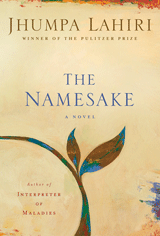
Book Review: The Namesake


Well! I promised I’ll do this. And I don’t think I regret having made the promise.

The book is much better than the movie (of course). Somehow, things seem to fall more in place when you read the book (but, of course). Gogol does come across as an idiot, but not so much. Ashoke seems more mature. And Ashima, true to what her character should be, seems as lost as she should seem. The sister’s character has some sense (Sonia). Moushumi has a more meaningful role to play. Her past, present and future makes more sense. So does Maxine’s.


Jhumpa Lahiri’s “The Namesake”,
as opposed to Mira Nair’s “The Namesake” is an extremely mature book written in a style that bridges the gap between India and America, just as Ashok and Ashima’s life tries to. At times, it moves into the narrative style of an Indian author, where there are graphic details around the mundane details of everyday life, the way people walk and talk, their cultural heritage and how that impacts their way of thinking. At several other occasions, she is at consummate ease with the American accent, style and ways. Jhumpa gets into the skin of these characters completely, and everyone is identifiable.

GOGOL: Gogol, coming across as an ABCD in the movie, is pretty much an American with Indian parentage. He is not a wannabe American, as ABCDs are supposed to be. On the contrary, he is as Indian as anyone else. His way of thinking, getting frustrated with weekend Bengali parties, are not something that I won’t see in an Indian metro of today. Just because the setting is that of USofA, it does not make Gogol any different

ASHIMA: Ashima is the quintessential taken away from her roots, Indian woman, so diminished in identity already, being forced to find/create a new identity in an unfamiliar land. She does not share the eagerness of new-gen IT geeks who would probably hang by the wheels of an airplane to go to the States, if that could take care of the H1B issues! For her, its about speaking a language, talking about things that seem so alien to her. Especially, when you are coming from a country where talking to your relatives and neighbors is the biggest social activity. Her ordeal as her children move from her side of the world to their side of the world is very subtly laid out in the book.

ASHOKE: A very mature, and subtle individual, wizened through the age, experiences and literature he devours, Ashoke comes across the most compromising and far-sighted individual in the book. He talks in a language that smells of the future, handles situations in a way that tells you how much he is thinking, has an unwavering integrity about his character, and a simplicity that you end up loving. And his character, somehow, is one the least covered and most powerful characters in the book.

MAXINE: What the movie failed to do is to highlight Max’s lifestyle and her family. From the word go, in the novel, you can feel that their relationship is doomed, despite all love and comfort between the two. Unlike the movie, the breakup does not happen at a time when Gogol is not able to think about anything, but beyond that time, when Gogol is still not able to think of anything. A severed relationship at the time of crisis can be mended, but a relationship severed because of a drastic change in life, probably cannot.

MOUSHUMI: Does get a bit of attention in the novel. The movie again, does not do justice to the complexity of her life. The presence of Dmitri in her life, a long time fetish, her love for Paris, her inability to fit Gogol in her social life, and a dying relationship (which still survives in India because of the social boundaries) are all well detailed in the book.

Starting off with the birth of Gogol, and explained through Ashoke’s accident while he still had Nikolai Gogol in his hands, Namesake explains the need of some people to remain commoners and not really stand out in a crowd. Gogol’s biggest grudge against his name is that it makes him stand out. Nobody names their children Shakespeare, for instance. Gogol wanted to be a part of the crowd. In addition to the brown skin, which never really stops him from dating or being accepted by whites, he has a unique name to contend with. While I think about this, I am sure there must be a lot of people out there who would love to explain the history of their unique name. It makes them stand out and they probably love that!
This struggle to be a common man makes him the son of Ashoke and Ashima, common Indian people, who have a preference for being a part of the crowd. Isn’t that what defines, in large parts, what Indian society think like.
Gogol struggled to find his own place by keeping both the worlds happy. When he could not, he chose one over the other. At times, he tried to understand what the other world is like, and at times, he gave up.

For me, there are 4 things that I like to see in a book

1. Content- story – I would not call it a great story, but its high on content. The story does not tell me something that I, as an individual, have failed to notice. But it does present itself beautifully. . What does make the whole story intriguing is the way people handle their own set of challenges.
2. Attention to detail – Awesome! This is the area where Jhumpa Lahiri nails it. Even the rituals of walking, driving around the blocks, switching on the lights when Ashoke dies, the use of rooms on different occasions,
3. The pace of the book – is a little slow, but in tune with the mood. There are pages that you can quickly run through because they are quick. There are times when she wants you to devour the details, and the pages are a little slow there. But not meaningless.
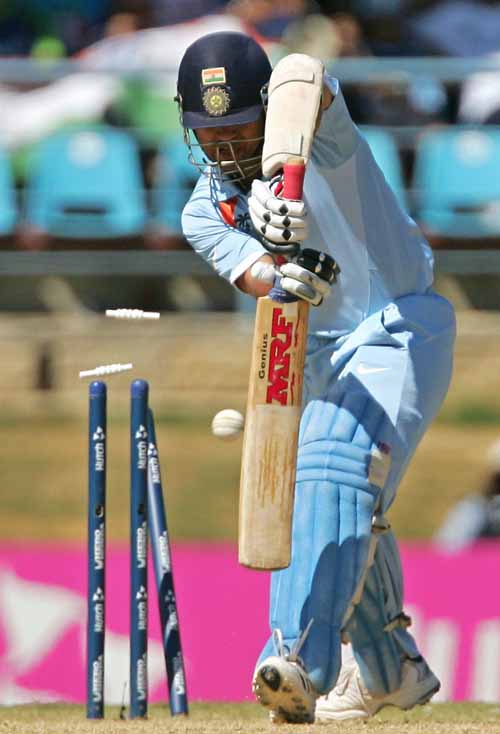
4. Loyalty to the genre (a thriller should thrill, a classic should have something to stand the test of time, and should be reflective of the times when it was written) – I don’t know where The Namesake belongs. But it seems to be in place! That’s as vacuous a statement as I don’t know if Tendulkar should continue to play cricket, but I think he is playing well. Bottomling – it’s a nice book to read! It does not give me a feeling of reading a boring thriller

Read it.. especially if the movie disappointed you. At least you won’t blame Jhumpa Lahiri for writing a mundane story!

Movie Review: The Namesake


I saw the movie more than a week back. However, I was thinking of writing the review only after I have read the book as well. As Diamond would have it, the book has taken steam in the last day or so, and the review has been pending a while.

Yenniways, back I am. To talk about Gogol, Goggles, Ashoke, Ashima, America, India, Bengal, and all their Namesakes.

Of all the classical literature I have followed, somehow, I never ended up reading Nikolai Gogol. Dostoevsky, Chekhov, and Tolstoy were as much a Russian repertoire as I could get comfortable with. Anyways, the plan is to read and figure out if I have also come from Gogol’s overcoat.

The movie seems to have impressed a lot of people, but yours truly wasn’t really impressed. And for a change, the biggest disappointment was Tabu, who just doesn’t seem Bengali enough. IrfanKhan is extremely convincing in his accent and demeanor of a Bengali. Kal Penn disappoints (with due respect to his comic timing and my appreciation of his several other movies). Others don’t really have a role.

The Namesake is the story of Gogol Ganguli (or, Nikhil Ganguli) (Kal Penn), the namesake of the great Russian author Nikolai Gogol, with his unique name bestowed upon him by his father Ashoke Ganguli (Irfan) given his love with Russian literature and a past haunted by an accident.

However, rather than getting into the story, which I will definitely get into in my other post on the book review of The Namesake, I will focus on the movie.

The things I did not like about the movie (there are n number of blogs talking about how good the movie is!)

A. Settings

  • Calcutta (then, and now Kolkata) of 1974 hardly seems authentic.
  • Ashoke’s accident occurs in 1974, and he is bed ridden for one year. He goes to the US for 2 years, and that would take us to 1977. Getting married in 1977, and with a son who is nearing 25+ years at the time of going to Maxine’s house in New Hampshire, would take us to something like 2003+. I am surprised that neither Max nor Gogol had a cellphone. Surprisingly, no one in the movie had a cell phone till the time Moushumi flips one open. And even at that point, she is the only one with a cell. Everyone else uses landlines all the time.

B. Performances & Characterizations

  • Tabu’s accent is just not Bengali enough. Her accent reminds me not of a Bengali turned American, but the recent metro English movies like 15 park avenue, etc. where the artists add a musical tinge to their English. “What Rahul! I tell you. These kids no! They are just taking our generation down the drain. You don’t trust me? How mean?”
  • Kal Penn doesn’t look young enough to be a 14 year old (at the time when Ashoke gifts him the book). And he never seems irritated enough! More importantly, the story belongs to him. Somewhere Mira Nair has gone wrong in showcasing the conflict between Nikhil and Gogol.
  • His sister’s character is totally sidelined. With her first half looks, it was a good ploy, but the second half is where she should have had a role to play. However, the book is about Gogol. And Gogol’s sister probably is not important for Gogol’s existence.
  • The events are simplified a bit too much – Gogol’s hatred for his name is long drawn phenomenon where he doesn’t hate the name as much as its strangeness, its un-indianness or something like that. The trauma on his face (for the first 5 minutes after Ashoke tells him about the accident) is lost without any further analysis. And guess what – changing his name from Gogol to Nikhil is the most important thing he has done ever.
  • The divorce between Gogol and Moushumi just happens. Moushumi’s side of the story is never explained. And she does look pretty hot in some of the sequences. So my sympathies are with her. Not with the confused brat Gogol.
  • Breakup with Max! but why? What went wrong? In her own way, she wanted to be a part of the family. What went wrong there? No explanations given!
  • Gogol’s choice of being an architect. Again, too simplistic. What was he doing till the time he saw Taj? There is only one point where he is shown sketching. But what about the career shaping forces known as Indian parents, who want their kids to become doctors/engineers!!
  • I can go on and on and on. But the point remains. Some of the underlying struggle of being a namesake, a fact that haunts Gogol forever, are hardly dealt with.

I feel, as I write this review, and as I walked out of the theatre, that The Namesake is another book turned movie gone average, a fact I would never understand. When a novel is written, the authors usually creates exquisite detail around who a person is, their life, their environment, their dresses, the walls, the colors. Someone converting it into a movie, needs to be honest to the spirit of the book. But they edit and re-edit it. Thinking they are making more logical sense than the original. They underestimate the viewer. Moreover, they make the mistake of assuming that the viewer has read the book.

However, having said all this, let me take some of the harsh words back. I am being overcritical because I had high expectations from the movie. I don’t remember having the feeling of walking out of the movie during those 2 hours. SO, its definitely worth a watch. It’s a decently narrated story in chunks. Its a collage of small snippets that Mira Nair tries to walk us through in her journey of understanding Gogol. Or, maybe, that’s her understanding of Gogol. It’s a reader’s interpretation!

Overall Rating -5-6 out of 10. Bulk of that 6 is Irfan Khan. And the fact that the movie is not a bore!

Gul Hui Jaati Hai : Faiz

This is one of the most beautiful Faiz compositions that I have heard. With Abida Parveen’s voice adding soul to these beautiful words, its the perfect setting for a nice quiet evening. I have seen a lot of people wondering about what the ghazal means. Thats when I thought I should just write this bit out. Listen it here

गुल हुई जाती है अफ़सुर्दा सुलगती हुई शाम
धुल के िनक्लेगी अभी चश्म-ए-माहताब से रात
और मुश्ताक िनगाहों की सुिन जाएगी
और उन हाथों से मस होंगे ये तरसे हुए हाथ

Gul hui jaati hai afsurda sulagti hui shaam
Dhul ke niklay gi abhi chashma-e-mahtab se raat
Aur mushtaaq nigaahon ki suni jaaye gi
Aur un hathon se mas hongay yeh tarse huay haath….

The morose evening is lost in the silhouette of a fading sun
But soon, it will come out bathed in the moonlit night
And those eager eyes will be heard to, one more time
and these longing fingers will be entwined with those fingers again

उन का आंचल है िक रुखसार िक पैराहन है
कुछ तो है िजस से हुई जाती है िचलमन रंगीन
जाने उस ज़ुल्फ़ िक मौहूम घनी छावं में
िटमिटमाता है वो आवेज़ा अभी तक के नही

Un ka aanchal hai ke rukhsaar keh payrahan hai…
Kuch to hai jis se hui jaati hai chilman rangeen…
Jaanay us zulf ki mauhoom ghani chaaoon mein…
Timtimataa hai woh aawayzah abhi tak keh nahi…

Is this the decorated end of your sari, or the colors on your face, or the way you’ve dressed
There has to be something, that has made the curtains (that hide you) so colorful
I wonder, if in the thick dark tresses of her long hair,
does it(the moon) still twinkle, hanging, suspended, still yearning for thee?

आज िफर हुस्न-ए-िदल-अारा की वो ही धज होगी
वो ही ख्वाबीदा सी आंखें वो ही काज़ल की लकीर
रंग-ए-रुखसार पे हल्का सा वो गाज़े का गुबार
सन्द्ली हाथों पे धुन्धिल सी िहना की तहरीर

Aaj phir husn-e-dil aaraa ki wohi dhaj hogi…
Wohi khaabeedah si aankhein wohi kaajal ki lakeer…
Rang-e-rukhsaar pe halka sa woh gaazay ka ghubaar…
Sandali haathon pe dhundli si hina ki tehreer…

Tonite, the beauty of my beloved will show itself in the same resplendent glory
Those dreamy eyes, and those black eyelashes
the color of her cheeks flushed with the pink of roses (cosmetics/powder)
and those hands smelling of sandal, decorated with beautiful Hina designs

अपने अफ्कार के अशआर िक दुिनया है यही
जान-ए-मज़मून है ये शािहद-ए-माना है यही
अपन मौज़ू-ए-सुखन इन के िसवा और नही
तब्बा शायर का वतन इन कॆ िसवा और नही

Apnay afkaar ki ashaar ki duniya hai yehi…
Jaanay mazmoon hai yehi, shahid-e-ma’anaa hai yehi…
Apna mauzoo-e-sukhan inke siva aur nahi
Tabba shayar ka vatan inke siva aur nahin


This is the world of the couplets and my thoughts

Such is the essense of my writings, such is the fate of this doomed poet.
there is no other subject of my conversataions,
The mood of the poet wanders in no other kingdom but that of the beloved

ये खूं की महक है िक लब-ए-यार िक खुशबू
िकस राह की जािनब से सबा आती है देखो
गुलशन मे बहार आई के िज़न्दा हुआ आबाद
िकस संग से नगमों की सदा आती है देखो

Yeh Khoon Ki mahak hai ki labe yaar ki khushboo
Kis raah ki – Jaanib se saba aati hai dekho
Gulshan mein bahar bahaar aayi ki zinda hua abad
Kis sang se naghmon ki sada aati hai dekho


Is this the warm smell of blood, or the sweet fragrance of beloved’s lips

From which direction is this wind blowing, someone go and check
Can you feel, with the arrival of spring, that the estranged have come alive
You must go and check who is the stone-hearted that sings the song of serenade!

Its difficult to do justice to such a marvellous nazm given my limited vocab. But an attempt is always on! 🙂 Let me know if you can think of some better lines.

BCCI jokes..ON NEW RULES….good ones!

Hilarious.. Received on mail from Rushank Vora 🙂

Drat… These people show this all the time and keep insulting us..

Sir, they are fans, they want their ticket amount refunded if the team doesn’t perform well..

Brother, anyways you gonna get out after making 10-15 runs and get only a % of your salary. Why don’t you get out now at 0. I will make sure you get your full amount…

Hey buddy, try and take this catch or else your salary 15k is gone…

Friends, I am gonna resign from this captaincy post. Even if I lose the toss they are frightening me that they won’t give me my salary…

Sir, I think I am gonna take VRS and become an umpire like you. Even without making runs or taking wickets I will get my salary right…

__._

For The Love Of Thumri

I have been meaning to write this for some time. What prompted me today, was my success in finding a particular composition– Balam Tere Jhagde Mein Raiin Gayee (Sung by Shubha Mudgal – Album: The Versatile Shubha Mudgal).

And what I wanted to write about was my love of Thumri. I owe it to Mrs. Vidya Rao, a Classical/Thumri singer who was brought in for a guest lecture by Prof. Ramnath Narayanswamy for his “Tracking Creative Boundaries” course during the second year of my IIM – B stay.

I still remember a lot of that particular lecture (a series of 2 lectures devoted to the history, nuances of Thumri). The fact that I and another friend of mine were privileged enough to be invited for an up-close and personal meeting with the lady at the professor’s home later on where she did enthrall us with a couple of thumris just made me fall in love twice over.

Thumri, as a classical vocal form, originated in the Kothas of Benares. Unlike most of the other dance heavy forms originating at the Kothas, Thumri focused on the rendering of the lyrics, which can be intensely complicated. The theme of the song – the pivotal line – such as “Balam Tere Jhagde Mein Rain Gayee” can be interpreted in multiple ways depending upon the mood and the rendering (and technically speaking, depending upon where the emphasis is). A thumri singer traverses through the multiple interpretations with the help of additional lines around a theme. These additional lines can be shers from ghazal writers, or dohas from poets, or complete stanzas from some other poets.

Let me take a minute to explain the example of what the different interpretations can be, depending upon the point of emphasis –

  • Emphasis can be on “Balam” where the beloved is trying to blame the lover.
  • It can be on “Tere” where she might be complaining about the fight only because it concerns something/someone unworthy of being fought for.
  • Emphasis could as well be on “Jhagde” and the futility of a fight between lovers.
  • If the emphasis shifts to “Raiin”, the beloved suddenly seems to be complaining about the night that was wasted in a quarrel. Too short a night, too many things to fight on, and too many ways of fight. The same emphasis can be interpreted in a naughty/amorous way as well.
  • And finally, if the emphasis shifts on “Gayee”, then the interpretation could be of future action, of let the lost night be the lost night and focus our eyes on the morning!

The Thumri singers were exemplary in their diction and knowledge of languages. Extremely fluent with multiple languages (usually Urdu, Awadhi, Persian/Farsi, Khadi Boli, Sanskrit), these singers created and passed through generations a form of singing that is not just beautifully rendered but is also a poetic delight. Another factor not to be missed about Indian classical music is the love for the god (if it can be called Romantic Mysticism). In almost all vocal musical forms, the poet treats God as his/her lover and through love, one tries to achieve salvation.

Lucknow and Benares continued to be the two prime centers of Thumri, which in the later decades led to other singing forms as well.

If you wish to explore the complexities of Indian Classical Music through a seemingly lighter musical form, Thumri is prescribed! Transcend to another world of love, longing and devotion.

Theatre Watch: Karode Mein Ek

A Makarand Deshpande play, Karode mein ek is a very sensitive portrayal of a patriarch who has gone insane after losing his wealth due to the betrayal by his own brothers.

The story starts at a point where Bansidhar’s (Makarand) son (Yashpal Sharma) and his daughter-in-law are struggling with the whims and split identities of Bansi, who refuses to believe that he has lost his wealth and stature. He revels in his lost glories, has forgotten his young daughter who cannot stop caring about his father, remembers small anecdotes from his yesteryears, is in love with his younger son’s (an imaginary one) wife(again, imaginary!). Yashpal, on the other hand, is trying to fight for respectable survival, keeps running around courtrooms and people who can help him. The daughter’s husband keeps coming up with ideas that never work. Yashpal’s wife keeps living and enacting multiple identities (mother, daughter, wife, daughter-in-law) to meet Makarand’s whims. Yashpal’s son and daughter are trying to make a name for themselves so that they can earn some money for their family as well. And there is the “Sarkar” angle of a friend for whom Bansi used to write speeches, and who later becomes the parallel government of Mumbai. The story ends at Bansi’s split personality killing his brothers and acting like the police inspector who is in charge of arresting Bansi. Bansi eventually kills himself, and Yashpal, with all his frustrations with his father and of being a failed son, becomes partially insane himself.

It takes a while to realize how much pain everyone is going through. The frustration of loving someone, and the difficulties in dealing with reality are the essence of this play. Makarand, Yashpal and Ayesha take this play to a higher level through their performances. The use of stage is phenomenal with the “other room” where Bansi sits, the partial illumination to give the effect of hope that never dies, and the interplay of shadows to highlight split personalities, being just a few masterstrokes. Background score is good, but could’ve been better. The story does not seem very new, but the dialogues are extremely tight and smooth. The disappointments were some of the support actors like the son-in-law and the (imaginary) daughter-in-law.

If you get a chance, do watch it. Its fairly experimental, with a lot of comic moments and some great performances!

Book Review: In Spite Of The Gods

Before I start commenting on the back, for the uninitiated, here is a 2-line spiel on Edward Luce, the luminary writer of this book.
Edward Luce is a Financial Times journalist who has covered India for a considerable period of time. (And his wife is an Indian). As part of his journalistic experiences, he did get to read, write and experience a fair bit of India. And the true enigma that India is, Edward is tempted to share his understanding of the profound through this book.
The name of the book – In Spite Of The Gods – The Strange Rise Of Modern India, itself tells you how a lot of people feel about India. Despite all that plagues modern India, people often surmise about what has brought India to this stage of exploding growth. Why is there so much talk about India being the next big thing in the global economy? The real answer is – Nobody Knows! It reminds me of this joke where the whole of US is baffled about “Jugaad” – a technology which ensures a 5 year tenure for a government with 20% of the seats in the parliament, which tilts the scooter at 5 degrees to start it, which provides food and shelter for those thousands of good for nothing young ones in villages who think sitting at the chaupaal and talking about Indian Politics is the biggest form of entertainment (besides periodic consumption of Chai and Gutkha), and which sums up the sentiment behind this golden statement – “Ho Jayega Saab! Aap chinta mat kijiye. Kuch jugaad to lag hi jayega!”
Anyways, back to Edward Luce and his rendition of the great (and not-so-great) story of Indian evolution. The book is very good when it comes to research, and sharing experiential learning. However, the book suffers from a very common problem. People who have not felt India, often misinterpret the chaos that prevails. Particles moving in random motion with a specified purpose often contain a powerhouse of energy within. Luce’s attempt to generalize a lot of Indian undercurrents fail at striking a chord with an Indian. Some of the opinionated generalizations are unwarranted too. However, there is no fun in reading an author if he does not have an opinion! [;)]
The thing that struck me the most was the elevation of Sonia Gandhi’s character from the common perception of an opportunistic politician. Sonia is portrayed as someone who was and is naturally averse to politics and is there in the Indian politics for a social good. Sentiments I could not just wait and see what they were trying to do with the country sound nice, but very untrue. At the same time, the hatred for Sangh Parivar and the fact that BJP has played a puppet in Sangh’s hands for long are bloated magnanimously, with there being no equal stage sharing for some of the other forms of religious paranoia plaguing our country. Not one to support the extremist acts of religious atrocities in Gujarat, it somehow paints an incomplete and unjustified picture if a “journalist” never bothers to look at all faces of the coin before forming an opinion.
The place where this book suffers the most, according to me, and I am not great orator or journalist, is that it confuses personal opinions with research facts. In the same breath, Edward talks about the facts and figures of economic growth, Nehruvian model of socialistic economic growth, and his opinions about Ravi Shankar, Sonia Gandhi, etc.
It’s a good read for those who like hypothesizing about India and the way going forward (I am one of them!), and those who love reading (seemingly) interesting anecdotes concerning popular people (oxymoron – anything related to popular people is an interesting anecdote. That’s how they became popular, right?). A little depressing for die hard Sangh fans, a little too upbeat for Congress supporters, the book is a spicy read, if nothing else!

Au Revoir.. Hope, Optimism and Indian Cricket


Before writing this post, I wrote a 3 page long post about Indian cricket team. And then realized that I was seething with anger. Like a true Indian fan.

And like a true Indian, I am opinionated. Here are 10 things that I think should be done –

  1. We, as a nation, need to go back to celebrating one off victories and stop looking for grandiose performances. We should act like minnows of international cricket and save ourselves some heart wrenching moments.
  2. We should stop calling our batting lineup the best. We have dogs that don’t bite or bark.
  3. Our batsmen should be paid on the basis of the amount of time they spend on the crease and the number of runs they score. Dada will win the race given the amount of time he takes the score the runs that he scores. Hmmm, let me revise the metric – A function of absolute number of runs scored, and runs per minute. Strike rate is meaningless. Its like counting the number of girls you hit on without having any affairs.
  4. There should be a pay per win policy. Tournament wins would get you more money. If you beat an Australia or SA, you get 3x, if you beat SL and Pak, you get 2.5x, if you beat England, NZ etc, you get 2x, for beating minnows, you get 1x. Bangladesh has just been promoted to 1.5x.
  5. Sehwag should be given a Titan watch (TCS and Tata Group company style) for long service and be given a subtle hint to retire.
  6. Utthapa should be given a frying pan. Flash in the pan brilliance, which comes and goes like a flash. He can also be given lifetime supple of the Rs.2 Nepali batteries also. That will help him keep flashing cheaply (pun unintended) all his life.
  7. Agarkar should be asked to take motivational sessions for MNCs. How to make money by being just 66.66% accurate. His knack of being back in the team despite bowling only 4 decent bowls every over is not a skill that can be replicated easily. He can think about Patenting his Agarkarizma (If Miracle?)
  8. Tendulkar can start a TV show – Who wants to be a Tendulkar? The reason I am saying that is that it’s a fading business opportunity. He needs to cash out. Soon, there wont be anyone wanting to wear the shoes of one of the greatest batsman ever, who never led India to any important series win (well, except that one innings in Sharjah!)
  9. The entire team should be made to watch Gunda at least a couple of times. There should be a quiz on what they learnt from the movie. Things like “Nothing is impossible” (Mithun is a coolie at the Airport), set yourself real and achievable targets (Do Char Che Aath Das- Bas!), you don’t need to confirm to the conventional standards if you want to win (Gunda is a commercially viable venture), etc. are only some of the lessons!
  10. And yeah.. one big request to the media – Lets start focusing on other games. PHL is nice. Sania Mirza looks good even when she is losing. Narain Karthikeyan can do with some support. Our chess players are great. And we have soccer fan clubs in every city. Its time we grew beyond a lost cause!

Inzing Away Into The Sunset

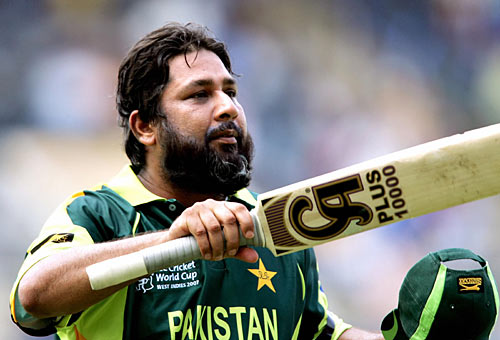
The tall monolith, moving with a poetic gait, cause of many a silly runouts and executioner of many a great innings in the world of cricket, Inzy Bhai called it quits last night. In the face of great shame (Pakistan ousted out of world cup, beaten by Ireland), and lots of despair (death of Bob Woolmer), he waves goodbye, but the Pakistani team will miss his services and his on-field composure for years to come.

1992 World Cup, where a great captain Imran Khan brought Inzamam’s heroics to the fore, and the world saw him mark his stamp of arrival into the cricketing world (the great innings against New Zealand in Semifinal), 22 year old Inzamam was all about grace, style and ease when it came to batting. I have never been able to figure out how he managed to have so much time to play his shots (especially, with his bulk).
His 378 matches, 11000+ runs, 39.72 average and 10 centuries don’t tell you the real magnitude of his impact on the game. Usually the smiling Buddha of Pakistan team, Toronto is the only place where someone saw him loose his temper.

Faras Ghani talks about his 5 best innings, while Osman Samiuddin bids him an emotional farewell. But nobody talks about one of the biggest banes of subcontinental cricket – the enormous pressure it puts on all cricketers. Houses are vandalized, effigies burnt, and slogans shouted everytime they lose a match. Why? Because they bring shame to the nation? Those slogan shouters forget that these are the players who put a lot of heart and soul behind those matches. That it hurts them as well when they lose. That when you lose, you want your supporters to rally behind you, urging you to keep the chin up. Inzy has lived through his own set of pressures and boiling moments. And has come out calmer all the way.

And if he seems soft, lets remind the cricket world about the walk-off Pakistan team did under his captaincy at the Oval. It takes a lot of courage to take such decisions.

So Long Inzy Bhai The generation of cricketers to come would not forget that batting might be science, but it’s the artful craft of players like Inzamam-Ul-Haq that makes cricket such a delight to watch. We will not forget those effortless sixes, delicate late cuts, fearsome pulls and elegant drives.

(c)RICKETY Affair

It takes a lot from refraining from commenting on the World Cup and the Indian Cricket Team. and I have done that a bit here with my previous post on cricket being about the fight between Gavs and Ponting. That fight took multiple dimensions with the entire Aussie team trying to defend their on-field behavior by not referring to it even once, but talking about how Gavs should not have brought Hooksie in this discussion! Well, hmm.. hmph!

But thats not what this post is all about. This post is about India, the WC and the Indian team..

1. We lost to Bangladesh. Greatbong rips our performance apart here.

My biggest grievance. If you have a wound, you treat it. If you don’t, it becomes gangrene. After a while, you need to remove that rotten part of your body because the infection starts spreading to other parts of the body. At one point in time, the Indian team (even though it was administered a little brutally) did this to good effect by letting Ganguly go. The left and the deft hand of Indian cricket for a good time, Ganguly, did come back with a vengeance.

Sehwag’s situation is worse. Its affecting the whole team. The recklessness that is considered the bane of all sports became style. Sehwag was joined by Dhoni. And now it seems to be the flavor of the season! Even the perspiring Dada [who is not ready to get off the wicket in this stint of his career, even if it means scoring once in 6 balls (the last deliver, to be precise)] played a reckless shot at 67 (and later on, against Bermuda).

Bowling was petty at best, and streetside on an average.

2. We thrashed Bermuda. I should be happy, right? Am I? not quite! After reducing them to 50-odd runs for 5, we still let them score 150 odd runs. That tells me that the body language is still not one for the kill. The batsmen were having fun making records, and that explained the 400+ score. Bowlers, too comfortable after getting the top 5, started reveling in that glory!

Dada was still perspiring. Two back to back half centuries against (presumably) below average bowling attacks would air a picture of a dada dancing down the crease to clear the stands far too many times. I would have wanted to imagine a dada slashing through the gully region and driving through the covers. Not this time. It was a hard toiled effort. But still, hats off to him for perspiring.

Some of the media folks have started reading too much into the comeback of Viru! But Mumbai Mirror has got it spot on– back all swell, against Popatwadi XI. Those who saw the match yesterday would recall the umpteen hit n miss shots played by Viru. The number of times he did not get out was more than the times he would get a chance from any other team.

Yuvraj still seems to be the best bet. Zaheer remains the pick of the bowlers, ready to bend his back, slog it out.

Design a site like this with WordPress.com
Get started