Chashme Baddoor. Or Bad Odour

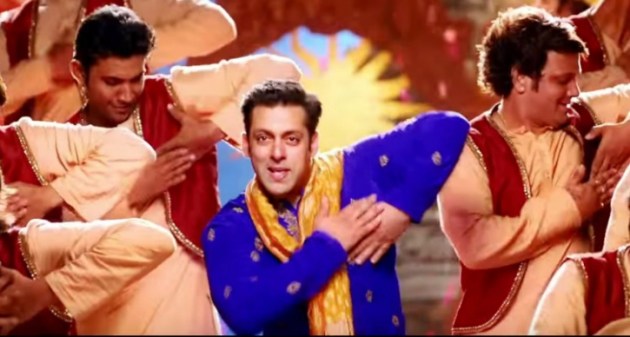
The new Chasme Baddoor is so bad, that it makes you wonder whether David Dhawan has really seen the original one. Or, did someone just give him the script of the older one?

The classic. The one that Sai Paranjpe made. The one that had Farookh Shaikh, Dipti Naval, Ravi Vasvani, Rakesh Bedi, and Saeed Jaffrey. The one that had only a few songs but even that tiny number included two classics – Kahan Se Aaye Badra, and Kaali Ghodi Dwaar Khadi. The one that was so natural that it seemed like it was happening in your neighborhood. The one that featured one of the most iconic non-existent brands ever – Chamko – jhaagwala, khushbudaar Chamko. The one where the smallest of acts, like the one of sharing a cigarette, or going on a bike together was given a magical touch of endearment. The one… Yeah. You get it.

The one.. was subtle. This one is loud and juvenile. The one … was understated. This one is an attack on the senses. This one has pathetic and randomly thrown music, compared to the adequate and beautiful music of The One.
The only thing where I do not want to blame this one is that at least two of the four central figures have tried to act. And the peripherals show up with decent preparation. Remember Saeed Jaffrey. Remember the short powerful sequences at the Paan Bidi shop. This one has Rishi Kapoor running a bar in Goa. And because David Dhawan did not trust him enough, a Lillette Dubey is added as his romantic interest. And two Anupam Khers. And Bharti Achrekar. Not that they are bad, but it just tells you that some calculation has gone wrong, when one powerful Saeed Jaffrey cannot be sufficiently replaced by five good actors. And I can never get over the fact Directors like David Dhawan always reduce such a fine actor as Anupam Kher to such caricaturish characters. The most disappointing presence of the lot, though, is – not the leading lady (even though “dam nahi hai boss!”) – Ali Zafar. Even Arjun Rampal would seem to have more variety to his expressions. In comparison. If you want to. That is. But why would you!!

Long after it got over, I asked myself if my hatred is so high because of the comparision with The One. Yes. Halo effect did happen. BUT. Even if I try to think about the positives, to be honest, I can only think of two – my first experience of watching Siddharth act as a buffoon and a crass lad, and Divyendu Barua, quasi repeating his Pyaar Ka Panchnama act. They do try hard to salvage.
Please do not watch it. I implore you. Let’s not encourage such travesties as David Dhawan’s Chashme Baddoor and RGV Ki Aag.

Book Review – The Test of My Life – From Cricket to Cancer and Back

the-test-of-my-life-from-cricket-to-cancer-and-back-hardcover-Have you ever started your day with an abrupt cough and vomiting attack? Imagine a tooth pain, can you? How does the drudgery of going to the office or college or school feel like on that day? Are you able to focus? Now multiply that discomfort several times over. And then, imagine trying to focus hard enough to win a world cup. And be the player of the tournament. Fathom the magnitude? That’s what Yuvraj did in 2012, as he overcame major personal odds to win the tournament. Yuvi pours out his heart in this chronicle of his fight against Cancer. Abruptly at times, incoherent at times, but with his heart in the right place most of the times.

This book is not exactly an inspirational book, like most such books are expected to be. It’s just a heartfelt chronicle. It starts with his denial of the disease, and ends with his eventually successful treatment of it. It is not a tale of heroism. It is not a glorification of how this victory was achieved. And thankfully, it gives credit where its due. The people around Yuvi who helped him wade through this journey. The resources he had at his disposal. And probably, most importantly, his mother.

The book was kind of personal to me. Over the last couple of years, we have gone through a similar journey, where sometimes the very act of living gets discounted by the fight for survival. Moving from a test to another, one opinion to another, one chemotherapy session to another. You know that you don’t have an option but to fight, but it becomes difficult every now and then. Somewhere when I was reading through the book, the book was an insight into how my dad might have felt over these months. We do not have the kind of resources that Yuvi might have had at his disposal, but I am sure the fight of mind over body does not become easier just because you have the best doctors looking at you. So, for that, I am glad that I read this book.

The book does not carry much of a literary value. Its language is unpolished, and fairly inconsistent. The timelines are fuzzy, and the editors have done a rushed job on the book. I would say that it’s a purely commercial act, and that ends up discounting Yuvi’s ordeal a fair bit. But thankfully, somewhat like Rafa’s sectional autobiography, the book has a very honest sound to it, and that’s what makes it an OK read. A somewhat more interesting story that runs parallel throughout is Yuvi’s relationship with his father. It makes you wonder if it was even a remotely healthy one or not. And how did such an unhealthy relationship become the foundation of such a promising sportsperson.

At this juncture, it’s difficult to say whether Yuvi will ever be a permanent fixture of the Indian Test team, but it suffices to say that several years back, when he opened the gates to the grand entrance, he almost blew them open. His talent is unquestionable, his work ethics has often been questioned, and his achievements do not stand true to his potential. Yet.

I think the true segment for this book is cricket lovers, and not people who are looking for an inspirational tale of fight-back. Someone who has no relation with the game may not even appreciate it. Not for cancer survivors really, because Lance Armstrong’s book is a better one for that. And I don’t enjoy the sports called cycling much.

And lastly, Dear Yuvi, you should not have used the book for such a heavy parading of your twitter presence and your charitable foundation. Seemed like an overdose by the end of it.

Jolly LLB – What The Brilliance Shuklaji

jollyThere is a sequence in the movie where Guruji (Sanjay Mishra), a hawaldar, is auctioning the post of SHO Sadar Bazaar to several police inspectors. His condition, in addition to the bid, the person needs to have a clean image. And the inspector who wins has only got an eve-teasing case from Delhi University pending against him. Suitably lauded, he wins the post for 65Lakhs only. Aap sabhi bade afsaron ko hawaldar ka namaskaar”, that’s how he begins the auction.

The simplicity of the proceedings is the heart of Jolly LLB. Jolly LLB is a rather simple movie with a simple idea and a simple script. And simply put, it’s a simple and enjoyable movie.

The movie has its fair share of flaws. Amrita Rao would stand out as the primary. She is not needed. Due to her, there are three songs in the movie and they waste time. And they slow down the movie intolerably. The first half of the movie hence, is slow. You get thepoint of the struggling lawyer, the success of a PIL, a case too strong to hit the headlines, a judiciary so weak that the criminals walk scot free, and a very successful lawyer who’s methods are questionable but his success is not. The part that takes about an hour, could have been done in about 20-25 minutes. Especially because the movie does not mope about anything. It does not over-dramatize anything.

Second half of the movie is much better paced. And with a lot of oddities being there, Subhash Kapoor leaves it to one of the most talented character actors of the industry to seal the case. Saurabh Shukla as the Judge Tripathi. An absolutely brilliant performance that outshines the other two excellent performances from Arshad Warshi (Jolly/ Jagdish Tyagi) and Boman Irani (Rajpal). Towards the end, as he takes subtle control of his courtroom and his bellowing “baith jaiye tejpal sahab. Ye mera courtroom hai” contrast to the burping and conniving judge when he’s introduced, are a joy to behold. It was also softly pleasant to see Ramesh Deo on screen, the man I most remember as Anand and Babu Moshai’s friend.

The other two flaws – Arshad Warsi is good, but is good doing what he has done too many times. His acting/style is not very different from his last few roles. I wonder when he will do another Sehar kind of role. More understated and intense than his lathering blabbering self. The second – here you have a young lawyer who is struggling and unmarried and is dating a school teacher. And Arshad Warsi does not look young. Not in one frame of the movie.

But he compensates for it. Still. It’s a nice movie. Not awesome. But nice.

Kai Po Che – A Casting Story

images

More often than not, overhyping a movie tends to kill it for the viewers who watch a movie late. And in these times of high information consumption, much as you try, those facebook status updates, or blogger reviews, or media soundbytes do reveal more than you would care to know about a particular movie. KaiPoChe was at risk. It was overhyped.

And it did spoil a few things. But not a lot.

Kai Po Che, for me, is a good example of how right casting makes huge difference to a movie. One of my gripes with 3idiots would always be that barring Shrman Joshi, the other two did not really seem well cast. Kareen Kapoor even more so. However, almost an accident since the big stars did not want this movie, the entire cast of Kai Po Che is near perfect in their aura. It was difficult to not like the movie. Now the question is – did I walk in wanting to not like the movie? Yes. I hated the book– The Three Mistakes Of My Life by Chetan Bhagat. Of the many really average books he has written, I think 3 mistakes is the worst. So, I did not want to see such a bad book turn into a good movie. In some corner of my mind, I was hoping that this movie would be as big a disaster as Hello (which is based on “One Night AtThe Call Center”, the second worst book by CB).
kai-po-che-movie-poster-6

Sushant Singh Rajput as Ishan, the obsessed cricket fan, is excellent. His angst, and the futility of his existence (for what else is it, if you’re a failed fanatic who can demolish even the things you really loves in a moment of frenzy), and his silent apologies – he works well to deliver the central character. There is a certain amount of energy, almost Shahrukh-ish (the early career). Rajkumar Yadav as the bumbling young man, who, for a non-gujju, is the quintessential gujju – the obsession with money matters, the persistence, the brilliant understanding of pennies, and a can-go-to-any-length-kinda-friend. Unsure in the company of Vidya (Amrita Puri), and the enterprising one – Govind is the perfect shadow in the movie. He keeps it real. Vidya is a perfect balance of caring and cunning naughtiness, and has a refreshing screen presence. She was pretty good in aisha too.
But the standout performance for me was Amit Sadh as Omi. In a way, his is the only character that evolves over the movie. The others carry their personality through the movie. Omi, however, graduates from being someone who almost follows anything that Ishan says, to an unsure and reluctant politician, to an enraged fanatic, to a scarred for life young man well beyond his years. His body language, expressions, dialogue delivery, and intensity evolve from frame to frame. Excellent performance!

Credit must be given to Abhishek Kapoor, and whoever else is the dialogue writer of the movie. The screen play does not deviate much from the movie, though the level of detailing is quite good. Despite the enormity of the events, their handling (which is praiseworthy given the quiet and peripheral handling of Gujarat riots and Godhara) never deviates from the core story of friendship.
Music by Amit Trivedi is excellent as usual. At the end of it, Manjha is the song that stays with you for very long. Swanand Kirkire’s lyrics add their magic to the notes.

Barring occasional pace issues, the movie is an extremely enjoyable watch. And watching Harbhajan take wickets was like an encounter with an alternate universe.

Can surely be watched and enjoyed. A 4-star kinda movie.

Book Review: Rafa , My Story

rafa-my-storyWritten by Rafael Nadal with John Carlin .

The book is a phenomenal piece of insight into how the mind of Rafael Nadal, one of the most brilliant athletes to play the game of Tennis, works.  The single minded focus with which he pursues the strategy, and the ability to execute what is often discussed in the war room on the field, that’s what makes Rafa special. Some may find it obtuse, but I have a feeling that one of these days, if Rahul Dravid were to expose the inner workings of his mind as candidly as Rafael Nadal does (has done), we would see how similar these two might be.

The book is written in two voices – one of Rafa himself, as he goes through “the final” against Federer – the first Wimbledon victory. The second is of the editor/author John Carlin. The chapters alternate with Rafa’s voice getting you as close to being inside Rafa’s mind as is possible (from the vantage point of the wimbledon final), and a third party narrative of how Rafa became what he is. The fans of Rafael Nadal may worship the book, while the non-fans would enjoy only about 30% of it.

Rafa’s narrative (half the book) is erratic and at the same time, so ruthlessly honest that you get a ringside view of the match, his mindset, his preparation, and his work ethics. The section has no literary value, no profoundness in the form of overbearing statements that every pack of jokers will claim to be their trump card. It’s a simpleton’s explanation of (probably) his biggest triumph, the victory of doggedness and mental strength over sublime talent.

Carlin’s narrative, on the other hand, is bland. It touches on several key aspects of Nadal’s career, but the focus on his relationship with his uncle Toni, the closely knit Nadal family, and his relationship with the world around him are barely scratched. The book steers away from almost all controversies, has nothing negative to say about anyone really. What one finds at the end of it is a warrior competitive to his core, who’s polished his swordsmanship talent by being in the arena for hours and days. And a gentleman. However, despite being bland and full of cliches, this is the part that reveals Nadal, the person, better than Nadal, the athlete compared to the other section..

If you don’t enjoy the sport, the chances are that you won’t like the book. It’s not a Mein Kampf, or My experiments with truth, which have a meaning for everyone. Rafa- An Autobiography, written halfway through Rafael Nadal’s career, is an enjoyable read, but not a great work of philosophy, as most awesome biographies/ autobiographies have the potential to be.

The Murder of David by Jayantabhai Ki Luv Story. Part 3

My middle name is Constipated

My middle name is Constipated

Vivek Oberoi has invented the expression that Neil Nitin Mukesh is adopting. The one of constipated anger. We will see large volumes of it in Zilla Ghaziabad, but for now, JKLS has him playing the role of a constipated bhai who takes dumps quite frequently. The comic relief is not bad at all!

The short description of the movie is – Girl has tough time in big city. Girl moves into a flat next to bhai. Hence, the rented status – Bhadotri. Bhai has an acquired status – Padosi. Padosi is a nice guy, and comically continues to help Bhadotri – with the frequent “just joking re…. sense of humourous”. One thing leads to another, and bhai and bhabhi get together. Some complications and twists thrown in here and there, and you have JKLS. Girl has a back story with her Baapu’s expectations. Bhai has side story with Big Bhai’s promises, Altaf bhai played by Zakir. Most likely, someone wrote a lot of funny mumbaiyaa dialogues and one liners, and then created a set of scenes around them. ‘That’, finally, led to a movie.

I have no money, and you are a bhai

Not a dream sequence, this one!

The plotline is wafer thin, but the acting and quips keep it together. Naseer, Zakir, Vivek Oberoi are the ones that keep things fun. Though, watching Naseer play a buffon rival gangsta/cop Alex Pandian (which by the way is a 2013 Tamil movie’s name as well). Alex Pandian’s fascination with bollywood is intentionally funny though, unlike the bulk of the movie. Neha Sharma, the bhadotri, does her bit by wearing fine and few clothes in a small time locality, living next to a supposed bhai, thereby creating unintentional hilarity. Surprisingly, she does not create any sense of awkwardness in the locality, or in the minds of a really conservative father who’s scared of sending her daughter to a big city, lives about 4 hours away from Mumbai, in a coastal city and pool-based-properties. Alibagh, you think? Main kya tere ko alibagh se aayela lagta hai?

Some of the dialogues are hilarious –  the Umrao Jaan reference while beating up a guy, the dig on Indian jails – when JB mentions that he graduated from IJU – Indian Jail University, because udhar bahut type ke English binglish bolne wale log aate, is a witty one. The movie has a Hotel Decent equivalent of Night Lovers as well.

The flow of sequences has no bearing whatsoever to whatever narrative storytelling might be all about, assuming the Director read the script, assuming there was a script, assuming script matters. Most set-piece scenarios are ludicrous. Thankfully, the movie ends while your patience with the chewing gum may still not be exhausted. Couple of songs are decent, though with sub-zero relevance to the movie.

The high point is Vivek Oberoi, which itself serves as a warning for a movie, usually. But honestly, he is quite decent. As decent as a constipated man can be a not so well ventilated room. The lady looks pretty. And is just about better than being a complete washout in the acting department. She is somewhat better than a fashion street top that fades on the first wash.

Short of it all – watch it on TV. You may actually like it.

This one was a 2 on 5 for me.

The Murder of David by Jayantabhai Ki Luv Story. Part 2

David ke do aage David. David ke do peeche David. Aage David. Peeche David. Bolo kitne David. 3 David! Correct. As you all know, David has 3 Davids.. And as you an guess, they do have a linkage somewhere. Otherwise, it’d be a lame idea to make a movie named David, right?

Davidar? Gower? Fincher? Schwimmer? No. Just David.

Make it 30 minutes shorter, cut down Monica Dogra’s and Lara Dutta’s presence, and tighten a few scenes. That’s all that David needs to be transmogrified into “Great Cinema”.

At the beginning of the movie, all three Davids are at the cusp of a life changing action.  A scene that we see at least thrice in the movie.

D1The first David is a perennially constipated Neil Nitin Mukesh. Since it is expected that he, having lost his father, would be a grumpy young man, his constipation is a disguised strength actually. Like that tweezer trick of Joey Tribbiani (FRIENDS). The second David (Vikram Virmani) is a hippie, who is so genuinely nice and all that you start wondering what exactly can go wrong with such a nice guy who doesn’t even have a girlfriend. The third David is a loony Chiyan Vikram. His (lack of) hindi skills don’t hurt him because of three reasons – he is a Christian (since independence, we have given Indian Christians the responsibility of speaking Hindi like leftover Brits would), he is in Goa (so speaking native hindi would be very unoriginal, a fact that is not applicable to the  other born and brought up in London desi David), and he is, in reality, a Tamil speaking superstar who was last seen in Ravana (after Ravana, one can forgive anyone anything).

D4Previous commentary withstanding, the third David track is the most interesting, with Saurabh Shukla adding a zing to the proceedings. Tabu waltzes in and out of this act and is brilliant in her role. Vikram himself is not bad at all. The supposed weak link of the story, Isha Sharvani, playes a deaf and mute character, looks ethereally beautiful, and has but a few expressions to take care of. The lady that plays Vikram’s mother is another piece of brilliant furniture in this large well lit room. The lighthouse symphony is a beautiful composition. AND, the constant ear trick is funny, a trait of the seafaring fishermen, I believe.

The first track, shot completely in black and white is reasonably tight. Though one wonders why Milind Soman is there to waste screen time. And Monica Dogra flirts and bites, but with little effect, and lots of boredom. Rekha Bhardwaj’s O Laal Meri filmed on Sarika is a nice touch, especially with the merging into the rock version. This is also the track where everyone seems to be wearing black or white, despite the shots being done in Black and White. Ah. Those were the days. Why waste on color when it has to be colorless.

D2The second track, the hippie track is the most disconnected track from the movie. If my opinions were counted for, I’d have asked Bejoy Saar to take it out, and focus on the other two. Nothing against Virmani though. Maybe, he was required for continuity, but I’d have figured out something else. But then, why waste 5-10 minutes on Lara Dutta and general sop. Moreover, since with the exception of the second track itself, the timelines don’t really have an impact on the proceedings. the 2011 story of Goan David could have happened in 1999 or 1973 as well. I hope I got the years right. I was too bored to remember such details by the end of the movie.

Bejoy Nambiar has got his casting quite right, I must say. Except Monica Dogra. Actually, her existence in the movie is not quite unjustified, but the length of her role is. In a movie of Davids, she is the real David turning everyone else into Goliath.

The detailing is quite nice too. Like, the David2 getting pager based messages. Or, people talking about the cost of bullets in 1973.
Soundtrack is praiseworthy . Very different, and very versatile, which is explained by the fact that there were 15 composers involved.

D3David, however, should have been cut down brutally by a good editor. Anurag Kashyap has been missed on this venture. I have been told that the Tamil version has only two stories. I think something like that should have been done for the Hindi version too. The end is quite well done. And Vikram’s Satku Santa is an idea that I’d love to take up some day. So much for secret Santa.

The movie is experimental, and well conceived. But not that well executed. And given the flavor of the season, executions should come easy, right?

Rating – 2 on 5.

Follow

Get every new post delivered to your Inbox.

Join 1,809 other followers

%d bloggers like this: