Social. Anti-Social. Happy 2015

About a few years back, I loved social media and the possibilities it created. It gave people a chance to say that they care about issues that were otherwise not getting picked up by mainstream media. There were the great crowdsourced help groups that were helping people during floods and terrorist attacks and tsunamis. There were candlelight vigils against blatant miscarriages of justice. There were hashtags that organized the chaotic voice of the masses.

Today, I get worried. We live in a very angry world. For every voice of reason, there are many many more that are just angry, intolerant, venomous and vicious.

The world that we live in is not a black and white world. There are few issues out there that are just perfectly black and white. Like rape. Or murder. Everything else, is a matter of opinion and perspective and vantage points. One man’s terrorist is another man’s freedom fighter or victim. The terror in the valley had two sides.. Iraq war – a few. Islamophobia has a few ore. Hitler does as well.

Yet, every day, my social media feed is increasingly becoming an assault on the senses. The opinions are absolute. Debate is not possible. Insults and slurs (that seemed to be a popular feature on rediff discussion boards in the earlier years) have become all pervasive. Patience is no longer a virtue. Not for the masses, it would seem.

Yet, every now and then, like a whiff of freshly brewed coffee, you come across a deep-web link or a near-perfectly researched piece that sparks off a debate amongst the people who still have the patience to understand and analyse and not react to the “headlines”.

The headlines are increasingly sensational. The reactions increasingly alarmist. But its not all lost. You can grab that cup of coffee a little tighter, press it against your face, feel its warmth.


So, here’s to an year gone by. And to a momentous year coming up ahead. That the anger around me doesn’t take me over. And that the cup of coffee stays warm. That there be more debates and less altercations that are worthy of a life so short. That there be learning that stay with me on this long journey.

थी गर्म हवाएं, तूफाँ का था अंदेशा
ये वक़्त गुज़र जाए, दे सब्र मुझे ऐसा

Digital Promotion: Happy Ending

Every now and then, I get these requests from agencies to promote some material on my website. Usually, as you can notice, I am averse to the idea of putting random stuff on my blog.


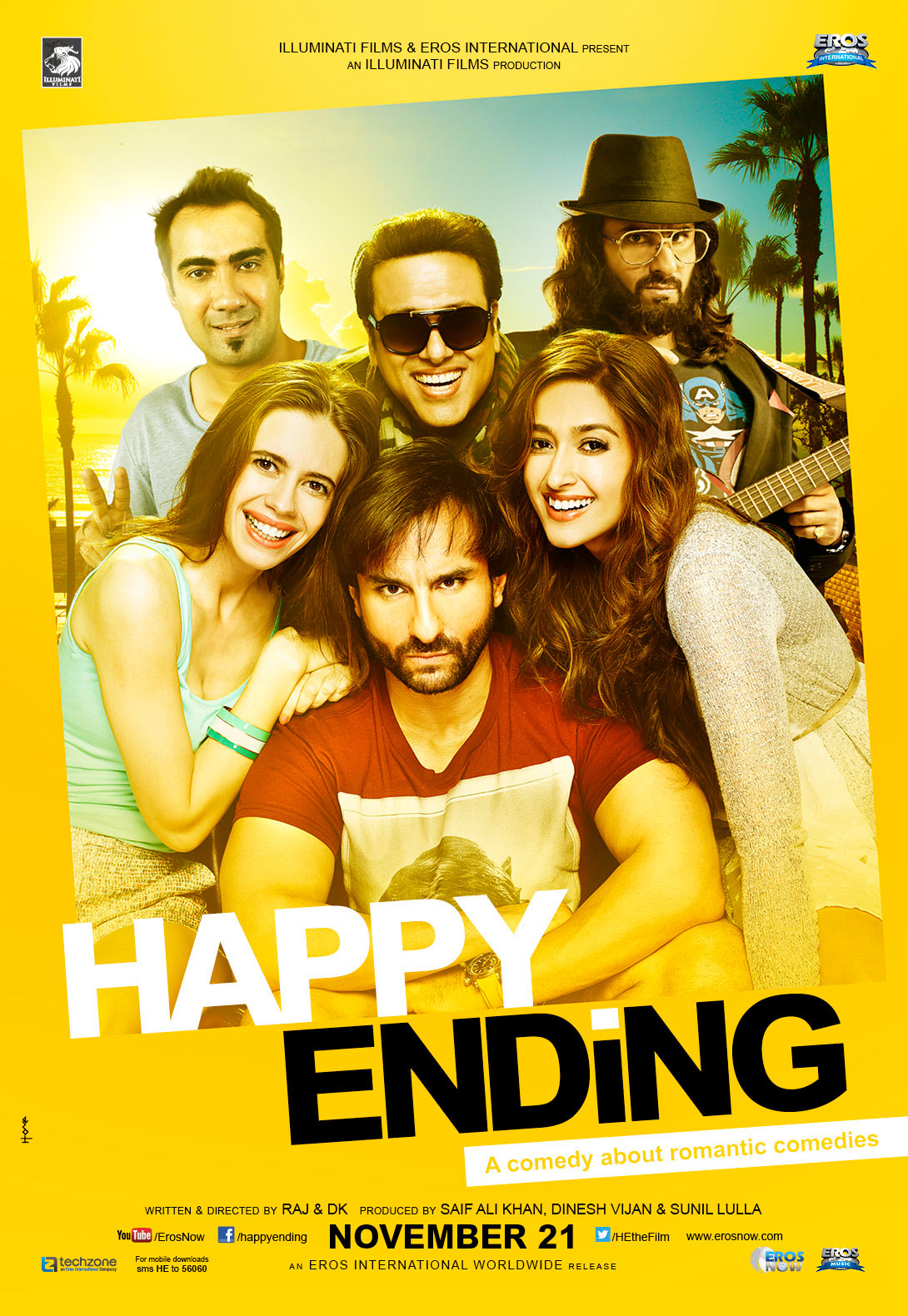
Last week, an agency sent out the links to some initial images, motion posters, trailers for Happy Ending (Illuminati Films’ and Eros International’s next – Directed by Raj & DK (?), starring Saif Ali Khan, Illeana D’Cruz, Govinda, Ranveer Shorey and Kalki Koechelin ). The reason I am posting it here – is not Saif or Illeana. Its Govinda!!!!!

I hope someone brings a bit of Govinda-ism back to the movies.


So, I am going to leave you with 4 things –

a) Trailer of Happy Ending


b) Motion Poster of Happy Ending

c) The 1st Poster of Happy Ending

happy ending

Click to see full size


d) A priceless Govinda scene from Jodi No. 1 🙂


*******

 [Update Oct 16, 2014]: Song released from the movie – Paaji Tussi Such A Pussycat.

Prediction: Chartbuster


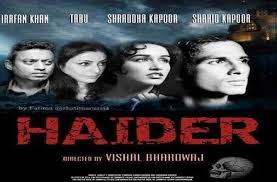
Movie Review: Haidar – The smartest movie of the year

Haider 2

How these things came about: so shall you hear
Of carnal, bloody, and unnatural acts,
Of accidental judgments, casual slaughters,
Of deaths put on by cunning and forced cause,
And, in this upshot, purposes mistook
Fall’n on the inventors’ reads: all this can I
Truly deliver.

(Horatio, in Hamlet: Act 5, Scene 2)


Faiz Ahmed Faiz, imprisoned at Central Jail in Hyderabad (the one in Pakistan), wrote this in his book Dasht-e-Sabaa –

Maqaam faiz koi raah mein jaNchaa hi nahiN
Jo ko-e-yaar se nikle to su-e-daar chale

मुकाम फैज़ कोई राह में जँचा ही नहीं
जो कू -ए -यार से निकले तो सू -ए -दार चले

I didn’t care much for the stopovers on the way; So, I departed from the lanes of the beloved, towards the welcoming gallows

When you read Faiz, the revolutionary poet who was one of the pall bearers of progressive literature, often makes you think that his ghazals and nazms are romantic. Truth be told, they are one of the most definitive fusion of romance and revolution. One would never know for sure if gulon mein rang bhare was written as his yearning for his wife, or his yearning for freedom.

Somewhere, Dr. Meer is singing the same ghazal in an unidentifiably named prison MAMA2, and somewhere else in the movie, a young Haider/ Hamlet is expected to complete the couplet – chale bhi aao ke gulshan ka kaarobaar chale. And , roohdaar (Irrfan Khan – rooh= Ghost, daar = gallows/ house), the prison mate of Dr. Meer/ the ghost of King Hamlet, narrates the backstory.

Tell me now, why wouldn’t you fall in love with this movie?
Haider 1

The juxtaposition of scenes and characters is brilliant.

The movie begins with Dr. Meer (King Hamlet of Denmark) getting picked up by the army under AFSPA and disappearing after that, Ghazala/ Gertrude (Tabu) watching on as Zahoor prays while his band of extremists are taken out by the army and her house is blown up, a bearded hairy Haider/ Hamlet returning to find his father gone and his memories burnt to ashes, Arshia/ Ophelia (Shraddha) fighting for her independence while really being a stooge in a patriarchial society, General Parvez Lone/ Polonius (Lalit Parimu) playing the fine role of a suave strategist army man who would go any lengths to get his way, and finally, Khurram/ Claudius (Kay Kay), who is the slimy conniving uncle that he needs to be. The splitting of Horatio into two Salmans(Salman Khan wannabes) copying the dance steps of “mere rang mein rangne wali”  is as brilliant a take as was the conversion of the three Macbethian witches into the two inspectors of Maqbool – “satta ke santulan ke liye aag ke liye paani ka bhay jaroori hai”.

And the final nail – Roohdaar, as the ghost of the dead King (Irrfan), whose puffed burnt eyes that are not able to sleep in the night.


Why would you not fall in love with this movie?

The acting is special. Even from Shahid Kapoor who everyone thinks will destroy his father’s rich legacy. Irrfan, Kay Kay, Tabu, Shraddha, Lalit Parimu and the others – they all just fit the piece.

The music, with the exception of ‘kabhi khul toh’, is intricately woven with the movie. A special standout mention for Bismil, So Jao and Jhelum. [on a separate note, purist as I am about ghazals, I think Arijit Singh has done a rather fine rendition of Gulon Mein]

The cinematography, coming from the man who gave us Ship of Thesus, brings the tragical beauty of Kashmir to life that few others have done.

The dialogues. Subhanallah. Almost poetic. Right from Chutzpah to Intequaam.

Editing – Again, with the exception of that one song, spot on. There are things left unsaid, unexplained. The audience is assumed to be smart enough to interpret or hypothesize. BTW, who was the man behind the mask? Does your heart go out for Dr. Meer who was supporting a terrorist? Oh wait, was that man a terrorist? Oh, but the army still did something horribly wrong, no? Wait, why are we discussing all this? Isn’t it about Haider’s search for his father and the revenge for what what was done to him? By his own brother? Was there a unrequited romance between Ghazala and Haider?


Who cares!! Enjoy the smartest movie of the year my friends! Movies like Haider, with the depth of screenplay, the finesse of dialogues, the detailing of characters, and beautiful visual storytelling, do not happen too often in Bollywood. That it’s a beautiful adaptation of Hamlet makes it more droolworthy*. That I was able to enjoy the movie so much despite me and the biwi having to take turns to play with Laddoo (who was exceptionally energetic all through the show only to drop off to sleep in the last 15 minutes of the movie) should stand testament to the brilliance of Haider.


[ *I never thought there could be another droolworthy adaptation of Hamlet after Hamlet-The Clown Prince.]

[Note: I don’t know which moron came up with the #BoycottHaider campaign. But then I don’t know why there is so much outrage on facebook and twitter about most inconsequential things either.]



Movie Review: Amazing Spider-Man2

I am a sucker for superhero movies. I rarely ever dislike them. So, my reviews are unabashedly biased in their favour. More often than not.

But this time, that’s not the case. Because Amazing Spider-Man is not really a super-hero movie. It’s a Romtion movie. I am not sure if I am coining a new term. But what I mean is that AS-2 is a romance drama disguised or wrapped up as an action movie.

Why do I say so?

A big part of the movie is dedicated to Peter’s estranged (and non-existent) relationship with his parents who left him at his uncle/aunt’s doorsteps, his maturing relationship with Aunt May, his on and off and on and off romance with Gwen Stacy, a confused friend (Harry Osborn), a distraught fan (Electro/ Max) and life in New York. Somewhere in there is a bit of a thriller plot about what’s really going on at Oscorp, the power politics, the hidden secret projects, a dying Norman Osborn, and so on. And somewhere towards the end, are a few well choreographed action sequences. And a mechano-Rhino.

Should that matter?

Not quite. A the Dark Knight taught us, Superhero movies can be as much about heroic action as they can be about the internal conflicts, the moral tussles and great character depth.

Is AS-2 that then?

No. The movie drags on for most part.

So, what went wrong?

While Peter’s story has always been the conflict between his personal sacrifices and the greater good, one wonders whether the construct is stretched too thin. Next, the adversaries. In the spiderman arc, most of his archnemesis have a human side too, whether its Otto Octavius or Norman Osborn. So is the case of Max/ Electro this time. However, unlike the other instalments, Max does not ring a strong connect this time round, and his self-obsessed insecurity complex works only because Jamie Foxx desperately tries to pull it off. Jamie Foxx is wasted as Electro, even as he shines as Max. Harry Osborn on the other hand is blah, at the best.

Andy Garfield, I think, is a finer spiderman, with a little more of the spidey charisma and humor quotient than Tobey Maguire. And he plays the conflicted yet responsible Spidey very well. Emma Stone seems continuously clearheaded about not having too many expressions, but is probably still an improvement over Kirsten Dunst in the looks department. Jamie Foxx, in his effort to make Electro credible, makes a worse caricature of himself than Suniel Shetty. Dane DeHaan shows promise as Harry, only to make it a rather unfulfilled one by the end of it as the new Green Goblin.

One expects long shots and droolworthy action sequences. And when they are there, they are as good as any that you’ve seen. But they are fewer.

The editing leaves a lot to be desired.

And before I forget, James Jonah Jameson has no role this time. How could you Webb?


Net net – the movie did not work for me. Slower pace, confused positioning on the dark side for a rather clean super hero, lack of action, and not so awesome electric adversaries.


Book Review: Love @ Air Force

“This book review is a part of The Readers Cosmos Book Review Program. To get free books log on to thereaderscosmos.blogspot.com


“A heart is a more sophisticated device than a Sukhoi”

“The violent romance of the Fighter planes with the clouds in sky… the pulchritudinous Officers walking around arrogantly… the runway with the logo constituted by the concentric tricolored circles in the background… is the spectacle meets our eyes at the feeble mention of the Air Force but there is more about the Air Force besides these…” – Official book blurb


Love @ Air Force is Gaurav Sharma’s debut novel, and is a love story set against the backdrop of the actual and perceived hierarchies at an air force base station. Most of us would have heard stories about what hierarchy and order means in the armed forces. Most of us are familiar with the world of class based societies where the rich and the poor don’t mingle, the masters and the servants don’t, and so on. And we are familiar with the fact that some of these divides and biases flow from one generation to another. A King’s daughter doesn’t marry a foot soldier’s son.

Such is the premise of the book, and Gaurav weaves a simple tale of unfulfilled love and compromises about JWOs and Seargants and Officers. The book is written with a lot of heart, and one can feel the personal nature of this story. Gaurav’s father was a JWO in the Indian Air Force for more than 26 years, and the narration for most part seems autobiographical.

The central theme of the plot is disarmingly simple. It does not have many layers, neither for the characters, nor for the story. One hopes for the author’s sake that such a plot lends itself to being a Bollywood romance drama, wherein an old-ish Shahrukh Khan gives up on his love for Madhuri Dixit to find happiness with Sri Devi. Or something like that. The question is – would you want to watch that movie? Or read that script?

When the theme is simple, the narration takes precedence over the story. The language, the imagery, the characters, the conversations. And that’s where the book fails to delivery. The quality of editing is horrendously disappointing. Without reading the book with great attention, I could find more than 20 glaring mistakes. A 50-page shorter version with crisper editing, a scrupulous editor with zero tolerance for grammatical errors and irrelevant flowery prose would have made the book so much more bearable. I had a tough time finishing the book, simply because halfway through the book, one could foresee the end. The quality of prose was far from being noteworthy. And unfortunately, the excitement that the air force delivers on a screen was completely missing from the narration, as most of the book is a bland narration of a love story come undone by the class distinctions of a military society.


I will go with a 1 on 5 for this one. Passable. Breaks my heart to say this, but your first and the freshest piece has got to deliver a little more passion.


“This book review is a part of The Readers Cosmos Book Review Program. To get free books log on to thereaderscosmos.blogspot.com

Names, Urdu, Religion and Us

The other day, I was thinking about the strong religious connotations a name has. Or, a regional connotation. Almost everyone I meet, thinks of me as a bengali, because of my supremely common name combined with a supremely common bengali surname. It’s a different matter that Das can be a bengali, bihari, oriya, assamese (and others?). Now, imagine the confusion someone who would be in if I had an urdu first name and my original surname. Or, my original first name and an otherwise urdu surname. Amit Shah Zafar, or Justjoo Das.

Which leads me to the conundrum I faced several months back. As me and the missus were going through names for laddoo, we were stuck on Guthli (the seed) as his or her pet name. But the formal name was a challenge. My love for urdu language in general, and ghazals as a a genre of poetry meant that I would often come up with (beautiful) names that would be immediately considered muslim. Not that me and the Missus have a problem with that, but this would have meant a lifetime of questions for the poor laddoo/ guthli. Imagine being asked five times a day, “you aren’t going for your namaaz? You are a non believer, eh?” or, “your parents are hindus, but you are a muslim! how?”. Imagine him repeating many more times in a day – My surname is Das and I am not a Bengali.

Just imagine the possibilities of beautiful names if such forced observations could be done away with. Instead of the Aaravs and Aanyas who have replaced Amits and Nehas these days, we could experiment with Arsh, Nihaa, Soz, Ghazal, Ashaar, Rehbar… Irrespective of the irreparable damage a boring surname like Das would have done to a Ghazal, an Ashaar Das would probably still sound beautiful. Imagine a Gurumurthy down south being called Soz Ramakrishnan – the firy Ramakrishnan. Or, Jatinder up north being called Sabr Singh- the patient lion. Such joy. Lost.

I just think that when you (can) bring other languages to your own, in an increasingly cosmopolitan world, it has the possibility to make it so much more beautiful. Alas, the only accepted confluence is english. So, David Patel or Arlene Mehrotra might be ok, but we will have to wait some more for a  Naaz Tendulkar or a Shoorveer Ahmad.

*It’s odd to be posting this at the fading end of a political debate where one gentleman is an extremist Hindu with a reasonably well documented hatred towards Muslims, another whose party has a long history of promoting religious/regional divide and rule, and a rookie whose name has been lent to an egg based delicacy at a place which claims to serve the food of the Greek gods.

Movie Review: Queen (2014)

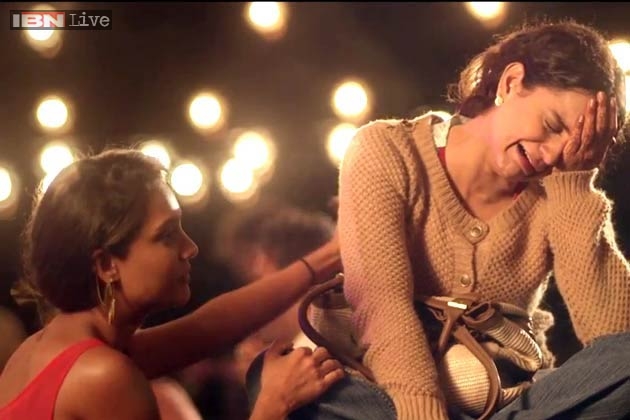
kangana1Rani’s (Kangna Ranaut) fiancée Vijay (Rajkumar Rao/ Yadav) dumps her on the eve of her wedding, he being a London dwelling engineer and she being a Rajori Garden types. Rani is crestfallen, having danced through her pre-wedding functions. She mopes for a night, and then decides to do the thing that she had always wanted to do. Go to Paris for her honeymoon. So what if the marriage did not work out. She has a ticket. And a desire.


Queen is all about Kangana. Her character, her personality, her dialogues, her foils. The movie has many perfectly placed set pieces, each acting their part out with aplomb, and making Kangana win over an audience that has hitherto found her largely devoid of talent.


Kangana had a good debut with Gangster. However, after Gangster, things never really evolved, and even I had little hopes of seeing an evolving actress. That being said, she continues to be one of those that I find to be extremely beautiful in real life (not reel life). Ethereal almost. She had a good one with Krish 3, playing the vamp turned good one, making more of a presence than Priyanka. But her performance in Queen is something else.


Queen is, most likely, the performance of the year. She has taken a rather mundane role played by many actors and actresses over the years, and added layers of texture to it, either by design or by accident. The end result is an extremely happy movie that does not depend on Rani becoming a role model for anyone, but on making you live her life. The movie keeps you smiling, even in the somewhat  tragic moments. Like when Rani’s grandmother is trying to give her advice after her fiancée has dumped her. Or, right after a street bum tries to snatch Rani’s purse and she fights tooth and nail to protect it, she narrates a pure-dilli style story to Lakshmi. Lisa Hayden as Lakshmi impresses, and so does Taka, the Japanese guy. Rani’s father, brother, mother are all excellent in their characterization.

queen1-dec22

The movie has some really amazingly detailed sequences. There is one where Rani wants to know what Heeng is called in Hindi, and tries to wake her mother up on a long distance call to figure it out. And in the Hungama ho gaya sequence, the way Rani puts the sweater back in her bag after waving it over her head is priceless.


Interestingly, Kangana is also credited with dialogue writing in the film.


Amit Trivedi has scored another winner with the music of Queen. While the promos seemed too keen on promoting London Thumakda and O Gujariya, the album is an out and out winner, whether it be the revisit of Hungama Ho Gaya or Raanjha or Taake Jhaanke. And Amit Trivedi is mastering that oft missing skill of blending the soundtrack of the movie seamlessly with the movie.


One must spare a thought for the salwar-suit that Rani is shown wearing in the pub. I hope it survived the shoot to be someday sold in an auction. Kyonki, with this movie, Hungama Ho Gaya!!!!


Go ahead. Enjoy it. On a DVD, or through the numerous TV reruns that will happen.

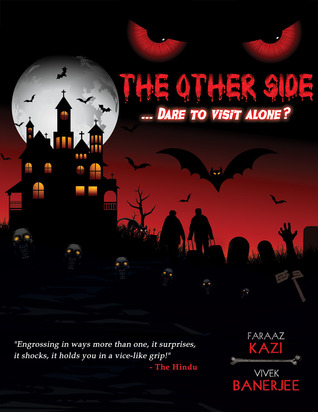
Book Review: The Other Side by Faraz Kazi and Vivek Bannerjee

<I was sent a copy of the book by the authors for an honest review. Blimey! Honesty? In this age and time?>

The other side

I hardly ever read horror, macabre, spooky and such books. I haven’t really read a lot of Stephen King, and/or his imitators. Nor, GreatBong’s The Mine. So, when Faraz requested me to review his book, I gave him as much of a disclaimer.  That being said, the merit of a book is in its ability to retain you while its unfinished, and stay with you once its over. So, I picked it up.


I got down to reading the book one fine afternoon, and thankfully, rather than being a long gut twisting novel, TOS is a compendium of shorter stories. Expectedly enough, it has (unlucky) thirteen stories. The stories range from spooky to macabre, but mostly dealing with the kind of urban legends, old wives’ tales, etc. that we have most likely heard growing up. Don’t go near that well because it’s cursed, or there is an old lady in white sari that comes by the graveyard every night and takes away little children that cry too much. I managed to finish the book in two settings, which is testimony to the book being able to retain me.


The prologue of the book starts with a casual chat between Vivek and Faraz as they start telling each other some spooky stories from their respective childhood. The genesis of the novel, it would seem.


The book is an easy read, and is hardly the kind of gruesome that I was expecting when I picked it up. Its audience seems to be decidedly on the younger side. But then, the authors are young too! And the narrative style as well.


Except for a story or two, it plays on one of two things – either a twist in the tale spookiness, or a tale of confrontation with the other side (the undead dead). The narratives are simple. The stories always seem familiar but have a measure of newness. Interestingly, recently, there was a link floating around on Facebook and other soial networks that captured really short two line horror stories, and many of them were mind bogglingly brilliant. As you read the book, I couldn’t help but think that many of these stories could have been condensed to give a more brutal and chilling effect.


For instance, the story about the girl in the village (Unfulfilled Desires) drags. And so does the story about the little girl by the banyan tree (Possession). However, some of the other stories are well edited and leave you either wondering or smiling at the end. In fact the first half of the book comes across as better edited than the second half. “The Fateful Night”, “The Long Weekend”, “The Mark Of The Beast”, etc. are enjoyable, while the “Dream Girl’ was disappointing.


The biggest success of the book is the variety of spook that is delivered. The stories are not carved off a single mould, and are not of a single flavour. The failure of the book – the inconsisteny of the experience. After the first couple of stories one comes to expect a twist in the tale format, but many of the remaining tales are extremely linearly narrated, and hence the horror is never really delivered.


At the same time, one must acknowledge that the genre by itself is a less explored one in the Indian English literary scene, and Vivek and Faraz have done a good job bringing together a bouquet of these quintessentially Indian tales, full of bhatakti aatmas, tantriks, and bhootiya havelis.


If you enjoy watching the horror films, give it a read. It may seem juvenile at times, but is an enjoyable read.


Book Review: The Virgins by Siddharth Tripathi

Siddharth Tripathi’s  “The Virgins” carries the ominous tag of “written by a young MBA riding the bandwagon of Indian publishing revolution”. I am scared of most books falling in that genre, usually, much as I would love to be a part of that bandwagon myself.

 How does one become a man? Three young friends are about to find out.

The book revolves around the lives, friendship and coming of age of Guggi, Bhandu and Pinku? Guggi is the sexpot fun seeking school bully, who comes from a lot of money, Bhandu is a middle class bred studious jock looking to discover fun, and Pinku is the much poorer struggling to get by bloke who tags along. Or, so it seems. Their friendship has undertones and dynamics that range from protectiveness, subservience, adulation, affection, cunning, to betrayal and tragedy. The irreverence of adolescence, the crushes, the archies cards with poems written by a friend, the first encounters with a failing relationship- Pinku, Bhandu and Guggi, grow up and grow apart. A little too far apart.


cce2f-the-virgins

The book is set in the city of kashi/ varanasi, and stays with the small city feel throughout. The life and times in a smaller city in the 90s was remarkably different from that in a bigger city, and the life now. There are the touches and flourishes in narration that can make you smile very now and then, and I think. Siddharth captures that nostalgia very well. And in occasional bursts, it hilarious.


The book has a linear storytelling style.  The flashbacks, as they come, derail the pace of narration. And somewhere in there, lies the biggest challange of the book. The three central haracters as well as the many peripheral ones don’t get the depth that they deserve. Almost all of them are presented somewhat frivolously. The parents, the parents, the teachers and the mentors. And doubt not the potential, for the chracters are extremely relatable, and people we would have seen in our school days. Maybe, some of the goony stuff would be missing. But that would be just about it.


There are times when I am very glad that someone writes on these themes and social setups. Given the dearth of quality indian literature that captures the psyche of that era of growing up in the 80s and 90s, most of the folks from my generation resort to facebook sharing of old telly serials, advertisements,and listing of things we used to do. Or, we watch Jo Jeeta Wahi Sikandar. Some of us would remember Goonj, the TV serial. When I read hindi literature, I am awed by the depth of charaterization in the pre independence era stories. Or even some of the stories set in in 60s and 70s. However, 80s and 90s seem to be the industrial revolution conundrum. Just as india skipped the industrial revolution to move straight to a services revolution, indian literature skipped  that generation to jump straight to the 21st century. There arent any wonderful literary records of the life and times in those two decades.  When the current indian workforce was discovering its identity. Or the lack of it. The old moralities were dying, and the new was yet to come in, the world was not a standard unified place where either everyone was looking for independence, or where everyone was looking to gain personal independence. I am a firm believer of history needing to be preserved not just through the eyes of the historian, but also in the literature of the generation.


Or, maybe, a lot was written but I missed all of  it.


Does this book attempt to go there? Not deliberately. I doubt if it even attempts to. It seems to be a simple enough tale that many of us would have grown up with. Dramatised for extra effect. However, in trying to tell the story of three kids from small city, the book does preserve some cultural references. And thats a good win. It’s not an exercise in nostalgia, and hence, not sepia tinted. It just is an account of things that happened in the lives of three kids who are on the verge of loosing their innocence.


It doesnt matter if the book is not the best written or the most flowing book. I enjoyed reading it one sunday afternoon, thinking about the times I had left behind in a small school in a small town, and wondering whether it still is the same.


Not the best, but a good debut by Siddharth. I wish him well for his future works.  Looking for a lazy read, go for it. Looking for a stroll down the memory lane. Read it.

Movie Review: American Hustle

As a child, my trips back to my native village involved a 2 hours+/ 40+kms leg on the narrow gauge train connecting the railhead of Darbhanga with the interiors of Darbhanga and Madhubani. On this leg, there would be vendors selling eatables that I’d not find elsewhere. Like – 12 masala 13 swaad (12 spices 13 flavors). It was a collection of 13 candies (the tiny hard candies, the most famous of them being the orange candies that most of us would have had as kids) – with the first 12 being individually flavored and colored, and the thirteenth being a mixed flavor (almost the equivalent of garam masala)!

I watched American hustle with a lot of expectations. The star cast seemed intriguing, and so did the setup. And the movie is 12 masala 13 swaad.

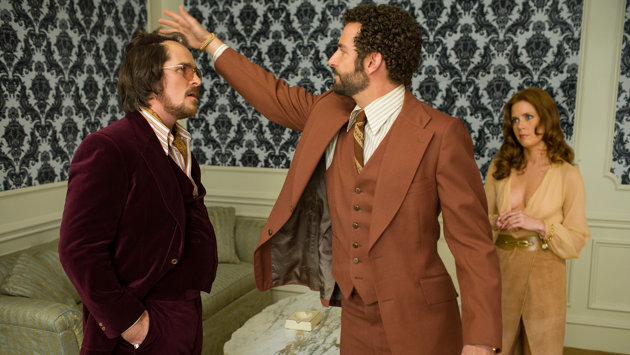
This year’s oscar battle now has two stark black comedies. Set in the 70s, the movie about two cons, Bale and Adams, caught and further enlisted by FBI agent Cooper, to bring down several congressmen, mayor and the mafia. Lawrence plays Bale’s wife (referred to as the Picasso of Passive Agressive Karate) in an interestingly complex marriage. Because thats what they do. They fight and they fuck.

AH1The movie is hilarious, and the drama perfect. The actors are brilliant. The cinematography realistic. The script average. There are many flaws, but they don’t matter so much, when the entertainment value is so high.

Renner is the Mayor, of italian descent, who is trying to do a lot for New Jersey, and Bale and Cooper set up a sting operation to nab him and others. How this entire operation unfolds, and what it means for the Adams – Bale relationship, the facades of each character, and the layers underneath that, the unfinished ice-fishing tale,  the conclusion- thats what its all about. Its a savory delight, and you have to relish it.

The movie’s opening shot, involving bale’s comb over, is a quirkily funny moment which sets the context for whats coming our way. Bale is in good form throughout the movie, having put on a significant amount of weight and a paunch to fit the role. Amy adams is delightful as Edith/ Sydney, and brings oodles of deceit, sexiness and vulnerability to the character. I haven’t seen silver linings, so this was my first real exposure to Jennifer Lawrence. And boy of boy! Is she brilliant in this one? She is a rockstar in this movie, and probably some of the most hilarious moments of the movie ride on her. Renner and Bradley ooper are good foils, but are heavily overshadowed by the three in top form.

The other piece thats near perfect is the contextual setting, right with the get ups and the hotels and the neighborhoods, to the language and the dialogues. The incident was semi-ready-made, but the treatment is what makes the movie is a joy. There seems to be a new trend in the US where the revisit to the retros is the new new. Probably given a shot in the arm by Mad men.

What did not work for me is the oversimplified plot and the corresponding plotholes. Some of the con jobs that are pulled off are too simplistic. Makes you wonder if the folks at the receiving end were that naive back then. Maybe. Maybe not, because the focus of the movie seems to be the stylistic narrative, the subtle and not-so-subtle humor, definitely not the script.

The movie does keep you glued and thoroughly entertained, and one can see why it would be one of the favorites for the oscars. Enjoy it. And while I saw the screener version (and hence the uncut version), I am sure the deleted scenes from this movie wont affect the movie as much as the deleted scenes of Wolfie did.

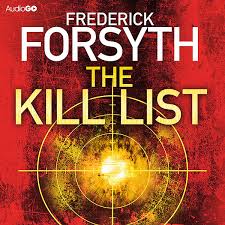
Book Review: The Kill List by Fredrick Forsyth

TKL

“In Virginia, there is an agency bearing the bland name of Technical Operations Support Activity, or TOSA. Its one mission is to track, find, and kill those so dangerous to the United States that they are on a short document known as the Kill List.”


For years, Fredrick Forsyth has been synonymous with “The Day Of Jackal” for me. It is somewhat unfair on an author when he has a long list coming after his best work, because nothing really ever matches up to the earlier one. So, I will try to be fair, and do away with any comparison.

 So, standalone, where does The Kill List stand? Well, I found it to be a middle of the road book. Offers enough for you to finish it off in a smooth read. Doesn’t offer enough for you to stay with it for long once you are done.

The book is set around a mysterious islamic preacher whose inflammatory sermons in the post 9-11 world are turning individuals into fanatic and killers. With more than 10 attacks across US and UK, an ex-armed forces agent, now known as The Tracker, working with TOSA, is on the chase, which becomes a little too personal, when one of the assassins kills his father. The hunt is on. The methods not strictly legal.

The book jumps between Pakistan, Afghanistan, UK, Somalia, Sweden, US and a few other places, perfectly aided by cutting edge spy tech, some chance coincidences involving Somalian pirates, and a level of juvenile cyber infiltration usually not expected from Forsyth, to get to the man, and do the clean up job. All this – To kill The preacher, the one with amber eyes.

The core hunt of the book, in Forsyth style, is about less than half of the book. The rest of it, expectedly, is spent on detailing detailing the incidents, and building the character of the Tracker. After a while, going through these attacks becomes mundane and boring. Someone is killed, and the killer’s apartment or laptop has sermons by a mysterious preacher whose face is not revealed. The real motives and inspiration for the preacher never really come out. Nor does the reason for his influence. Not a lot of ink spent on the characterization of the fanatics. What is done well is a detailing of the Tracker, the man on the job.


There isn’t any new flavor to this story. There is an attempt to ride on the Operation Geronimo that took out bin laden, with explanations given around why similar tactics could not be deployed, and the difference in the modus operandi of this new guy. The book remains a very basic well written book about the hunt for a criminal. Good guy, bad guy and a very smart good guy using cutting edge infrastructure to nab a very smart bad guy. Except that you hardly see the genius of the evil mastermind. Its over simplified. In the end, for most part, it is an exploit for young Ariel, the hacker whiz kid, making the entire intelligence apparatus look like ponies.


Forsyth effortlessly blends the narrative with his style of detailing each and every scene. So much so, that it seems ready to be a movie’s screenplay, and I would not be surprised if its picked by some Director with a limited imagination. The high point of the book is the effortless ease with which you can finish off the book.


The Kill List is something that you should pick for a long flight. Finish it, and leave it in the craft for the next traveller. Its not worth hanging on to it, or increasing your shoulder bag’s weight for.

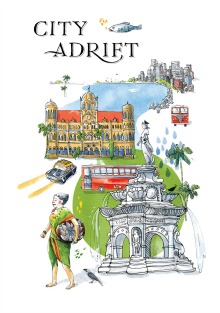
Book Review: City Adrift – A Short Biography of Bombay by Naresh Fernandes

I take my words back. When I referred to the book earlier, I had mentioned that it was a dry read. I take it back.

CA1Summary: Go read it.

Back in the early 90s, when I was a school-kid in Ranchi, I was fascinated by some of these guys who’d know fairly great details about the girls they had a crush on. They’d know the typical schedule they keep, their walk and talk times, their teachers, friends and foes, where they lived, where they ate, their parents’ history, blah blah blah. How? That’s the question I always struggled with. What I knew for sure is that their crush was supported by a huge volume of research painfully collected and organized over days and weeks and months of following the girl everywhere. On a cycle. On two feet. On a scooter. In the morning. Or the evening. Effort. Love. Dedication. Single Minded Focus. Oh… and there was heartbreak too!

City Adrift gives you a feeling that Naresh loves “Bombay”. He still doesn’t like the city being called Mumbai.

Over the years, I have had several fascinating conversations about the city of Mumbai/ Bombay with several people, most of whom I believe knew a lot more about this city than me. The landmarks, the emotions, the stories behind the daily places, and what-nots. And like most great cities’ history, Mumbai’s history is fascinating. And most of these conversations often become a rant about how bad things have become, and how the city is doomed. We, the all knowing, take prophetic stands, based on all the wisdom those conversations bestow upon us.

Alas, I knew not much.

As you flip through pages, the first few pages worry you. It seems like Naresh is building up on a rant about a depressingly true facet of the modern Mumbai– the real estate prices and the emerging “townships”. However, the deftness with which it starts unfolding layers after layers of the city’s evolution is remarkable.

Naresh takes you through the key moments in the coming together of the seven islands that form Bombay, the reclamation of land that’s still not complete, the cultural and ethnic evolution, the insiders and the outsiders, the haves and the have nots, the current and the forgotten, and the now and the future – with stories and anecdotes that only someone who’s done extensive research on the subject can provide. It manages to avoid the possibility of the book becoming a long rant about the current state of affairs. At the same time, it never gets stuck so deep in a piece of history which has become irrelevant that it remains of interest only for people who love history. The book is surprisingly contemporary in its coverage. One of the fun references in the book – the average speed of cars in Mumbai often is less than 10kph, which is about half the speed of the winner of the annual marathon in the city. And yeah – all the digs on the real estate adverts are fun.

As he navigates from the then to the now, you understand better what he means by the city being adrift – a tiny goal-less, direction-less, vision-less, rudder-less speck in an ocean of humanity – and a terrible heartache is all that you are left with. Like the cliche goes – beautiful girls marry dumb jokers. Mumbai has had her share of administrators and politicians.

Pick it. Read it. Enjoy it. Great investment if you want to understand the uniqueness of this city… And the uniqueness of its challenges.

Feel like having Biryani? Watch Dedh Ishqiya

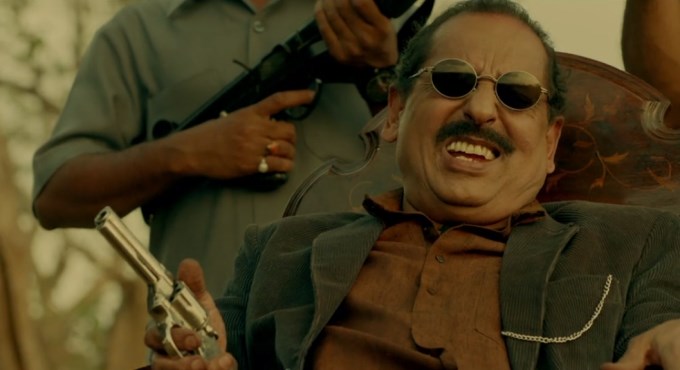
Agar batman mar gaya to joker kya karega. Aata goondega?

Agar batman mar gaya to joker kya karega. Aata goondega?

Dedh Ishqiya is a delightful movie. Flows like water, grows like wine.

If you had a doubt that Babban and Khalu’s chemistry won’t be the same the second time over, worry not. The sparks still fly as you continue to marvel at the real undercurrents of their relationship. Naseer and Arshad continue to razzle dazzle you with the best bro-act. You don’t get to say this often- Ghaaghre Ka Pissu Babban stands taller this time, even though the movie belongs to the Nawab of Chandpur Khalujaan.

If you thought Mushtaq Bhai was funny only the first time, think again. He delivers one of the finer Batman moments of the movie right at the beginning

Instead of one, there are two ladies – but it’d be unfair to Vidya Balan to say that they score over her. I am an ardent Madhuri admirer, but Begum Para is only a shadow of the Madhuri of Mrityudand, Beta, and many more. Huma Qureshi almost sleepwalks through her role which doesn’t make her do anything beyond her Wasseypur shades. In her dancing moments, Madhuri continues to be the gold standard. In the Humri Atariya sequence, one cannot but notice the remarkable difference in the grace, style and expressions with which she dances, and Huma is almost an eyesore in that song. However, Vidya Balan, in the previous edition, had a level of evil and vixen-ness that is clearly missing from the leading ladies this time. That said, if the trailer of Gulaab Gang is anything to go by, I have a feeling we are getting closer to the Madhuri Dixit of yore.

The surprise package of the movie (not so much, really!) is Vijay Raj in the role of Jaan Bhai. I have never really written on how brilliant his comic timing can be. Remember Raghu Romeo. Better still, remember the only watchable parts of that horrible movie “Run” ? Vijay Raj is amazingly awesome as the local MLA/ suitor of Begum Para.

Moving on to the non-people parts of the movie – the star of the movie, like the last time, is the quality of screenplay and dialogues. The chemistry of Khalu and Babban would be only half as explosive if not for the dialogues. However, one most not forget the beautiful use of Urdu – the language of the nawabs. The ingredients – nafaasat, adab, tehzeeb aur salika – are all present in their glory, only to be immediately replaced by Khalu and Babban’s Bhopali Hindi with consummate ease. The English subtitles (forced upon me in Dhanbad, of all the places!) destroy the beauty of those dialogues. But if you can avoid getting burnt by the subtitles, Dedh Ishqiya has one of the best written dialogues in the recent times. . I am glad that they enlisted Bashir Badr as the writer for the Urdu ghazals/ nazms. Bulk of the poetry/ selection is exquisite.

di1

Khalu to Babban: Zara lihaaf hi maang lo

One cannot but marvel at the mini salute to Ismat Chugtai’s Lihaaf towards the end, and the various mini allegories thrown every now and then. Noor Mohammad Italvi (Manoj Pahwa of Bhatia Saab fame) being one of them – kyonki humari ammi Sonia ji ki badi achi dost hain. Munira’s Kaagzi Begum reference, and Jaan Bhai’s quest to be a true nawab.

Dedh Ishqiya’s music isn’t as big a chartbuster as Ishqiya’s music was. That does not mean it is not as soulful. Dil ka mizaaj ishqiya may not be an equal of dil to bacha hai ji, but stands tall as a beautiful ballad. The problem with it is that it’s too similar to the earlier one. What one misses is Mika’s ibn-e-batuta anchor, which Honey Singh fails to provide. Humri Atariya, Zabaan Jale Hai, and Jagaave Saari Raina are good parallels to the music of Ishqiya. Unfortunately Begum Akhtar’s Atariya is probably more touching than Rekha Bhardwaj’s. The music blends as effortlessly as any other good soundtrack you’d remember. The qawwali, which does seem out of place when you hear the audio compilation, also merges well with the movie.

The movie runs at a very even pace, and does not slow down anywhere. A copycat moment of sorts is towards the end, where an action sequence has a traditional “Wo Jo Hum Mein Tum Mein Qaraar Tha” by Begum Akhtar (written by Momin) playing in the background.

To sum it up, Dedh Ishqiya, is like Awadhi biryani. Cooked to perfection, each morsel exploding like a million flavors in your mouth.

Book Review: Amar Akbar Anthony by Siddharth Bhatia

A few years back, Harper COllins India commissioned a Film Series, the first few of which included Jaane  Bhi Do Yaaron, Deewar, etc. These books were envisaged to be a throwback to some of the absolute cult movies of Bollywood from the yesteryears – movies that command a huge fan base, had some expected or unexpected things going in their favor, and a lot of interesting back-stories.

Somewhere, I feel the inspiration for this series must have been Anupama Chopra’s Sholay, a fantastic book that goes behind the making of Sholay and is a delightful read. The book from HC’s Film Series that stays closest to that exercise is Jai Arjun’s Jaane Bhi Do Yaaron.

I picked Amar Akbar Anthony in the hope of killing a couple of hours in a mall, as I waited for a movie show to start. Having read a few pages, I knew that this one doesn’t fit my expectations.

To set the record straight, the expectation I have from this series are – a lot of history, dollops of behind the scenes, a lot of trivia, and the process of making this film, which, by design or by accident, ended up becoming such a craze.

The book starts off well with a few nuggets and anecdotes, some soundbytes from those associated with the film, and some stories. However, it does two things which make it a rather boring read less than halfway through the reading – a) it starts dissecting the social construct around the times the movie was made, and gets into a critique of Manji’s movie making, and b) it wastes a lot of real estate by either repeating the same things over and over again (secular undertones of the movie, for instance), or by narrating scenes from the movie (the entire movie is narrated, and then some scenes are talked about over and over again – like the meeting between Vinood Khanna and Pran, or the mirror scene). I always thought the audience of this book is not someone who has not even seen the movie or has no idea about it, but rather one who is in love with it, and just can’t get enough of it.

After a while, I could start skimming paragraphs after paragraphs because there was hardly anything new. Worse still, it isn’t a heavy book. It almost feels like that research worth two chapters has been extended to fill a book by giving overemphasis to the author’s opinions on Manmohan Desai and his brand of film-making. The book is near pedantic, and seems severely out of water when the author is dissecting a movie and a director who’s absolute control on Box Office was undisputed, and who could be credited with a major part of the cult of Amitabh Bachchan. As Siddharth right points out, AAA was the turning point of Bachchan’s stardom, as it helped him move away from his angry-young-man image. 

The one place where the book deserves its due is in its understanding of Kader Khan’s contribution to the movie as a dialogue writer. Also, some of the incidents, like the filming of the mirror scene in Desai’s absence, or “I am not Satyajt Ray”, do help you recover some of the investment!

However, in summary, I would not recommended this book, as it fails to deliver the promise of the series.

Movie Review: The Wolf of Wall Street

Wolfie! Wolfie! Wolfie! Wolfie!! Woohoo!

Jordan Belfort (Leonardo DiCaprio) simplifies the uberpaced life on the wall street by showing how to create a pump-and-dump “trading” business  with a bunch of no-gooders, and in the process, snorting his and many others’ way to a big money, decadent lifestyles, wine women drugs and glory.

The story of Jordan Belfort is out there, in his own words, for those who want to read it. The penny-stock-broker-swindler-sales-guru, has been the subject of two movies now, and is the inspiration for many, I’d think. His was a life of excesses. And hence, it makes for great storytelling. The exaggerated sex, drugs and money – its all interesting. Its an anti-hero, and like most sinful guilty pleasures, there is joy in rooting for the perceived villain who seems to be winning all the time. In a way, Belfort represents our own deeper darker desires.

Back to the movie, the stamp of Scorcese is there, and the movie is undeniably funny almost all throughout. The narration in some of the serious moments of movie can make you fall off the chair, especially scenes like the one where Jordan crawls to his car after ODing on Lemmons 714. The cast is super-awesome, with Donnie (Jonah Hill) worth a million bucks, and Max Belfort, Brad, Rugrat and others adding to almost every scene’s worth. Matthew McConaughey in a short cameo is great fun.

DiCaprio pulls off another oscar-nomination-worthy performance. Though, I often got a feeling of a repeat. A feeling that I had seen this act before. That over-emphasized dialogue delivery, those expressions. I didn’t see anything new.

The best thing about the movie is the clarity with which each of the part-characters is developed. You can’t but not notice how the decadent soullessness of Jordan and Donnie is different from that of others like Rugrat, Pinhead, Chester and Brad.

The downer of the movie is its length. At a full 3 hours, with about 150 minutes of drugs, profanity, and zoned out conversations, there are several times when the movie seems to be stretching thin. The dragged out relationship with Naomi, the multiple identical looking scenes on the trading floor, etc. slow the movie down. There is also an overdose of the overdose. The drugs seem to be the central prop running throughout the movie. Naomi could have been a good counterfoil, but she is not.

The chopped off scenes might have made me understand the movie a little differently, but nevertheless. Wolfie is shameless fun to watch, and Belfort is that poster that you’d want to but will never put on the wall.

I’d go with a 4 on 5 for this one.


Design a site like this with WordPress.com
Get started