The Reading List

The bed side has 5 books right now –


City Adrift (hardcover) by Naresh Fernandes–
I am halfway through the book, and it has been a dry but intriguing narrative about Mumbai, its past, its cultural evolution, and its people. I am learning a lot of things about the city that I have been a part of for the last seven years. For the content, the narrative could have been a little more fluid. But I am not exactly complaining.

Amar Akbar Anthony by Siddharth Bhatia

Harper Collins had started this series of books on some of the cult movies of Bollywood. They were supposed to be a behind the scenes insight on how those movies happened to be. Jai Arjun Singh’s Jaane Bhi Do Yaaron is probably the best of the lot. Deewar, probably the worst. AAA, so far, has been a disappointment, with a little over a chapter of a thin book wasted on telling us the story. Damn it, you’ve picked a cult movie, and the person interested in the behind-the-scenes is someone who already knows the story. Get it?

Mirza Ghalib by Gulzar (Hindi) 

For those who have seen the TV series many a times, the books is a parallel running compendium. For those who have not, and enjoy good old fashioned storytelling (albeit in Urdu heavy Hindustani), there is a lot of Mirza in this beautiful book.

The Kill List by Fredrick Forsyth

Starts off in the usual FF way. The narrative and context setting is going on. The intrigue is setting in. The context is a mysterious preacher who has a confounding effect on individuals turning them into murderous fanatics, before and after 9/11. I will come back with a more detailed review later on.


The Casual Vacancy – by J K Rowling

This one’s going to be a difficult one to finish. I am halfway through, but everytime I drop the book, going back to it is a challenge.


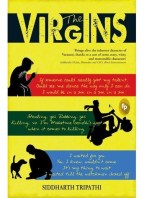
I recently finished reading Siddharth Tripathi’s The Virgins. Detailed reviews is pending, but for small-town-desis, its an extremely relatable book. The big positive – the easy narrative style. The big negative – the effort that has gone into developing the characters. However, works perfectly, if you want to pick something for an easy flight read or a quick weekend read.


What are you reading?

Movie Review: 47 Ronin

To say 47 Ronin is good – would be wrong. TO say 47 Ronin is bad – wouldn’t be right either.

There are three things that you expect from a Samurai movie –

1. Major philosophical discourse about pride and honour. Check.

2. Lots of high quality sword fight sequences. Not Check.

3. High quality art of war kinda strategy. Not check.

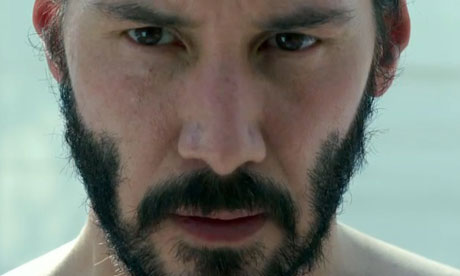
So, 1 on 3. That should be bad. What makes it worse is the unwanted element of Tengu (demon) forests and shapeshifting witches. And a Keanu Reeves who’s shuffling with Matrix part trois and Constantine. He talks in a laboriously husky voice, and an air of mystique. Not required.

ImageSo, in short, the movie doesn’t quite deliver what I had expected it to deliver. And hence, it’s a bad movie.

So, what makes me take a somewhat neutral stand? The production values are slick. Some of the cinematography is top class. The short but sweet action sequence towards the end is very well done.

The movie is long. There is no need for you to go for the 3D version on this one.  I would recommend that you skip this one. If you want an alternate recommendation, I’d go with 13 Assassins, or Red Cliff.

The Greatest Movie Ever Made – rewatched.

And the verdict is- it stays so. And hence, it should not be reviewed.

20140105-143415.jpg

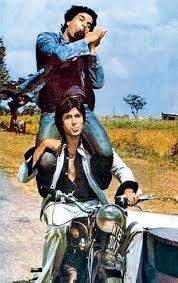
I saw it again. On big screen. In 3d. And it didn’t change a damn thing. Sholay is mindblowingly awesome fun. You know every scene, every dialogue, every twist and turn. You know the funny ones and the poignant ones. There are no surprises.

Yet, you long for the Jai-Radha romance once again. Yet, you laugh at Basanti’s yun ki once again. Yet again you fall in love with Gabbar. And Imam Saheb- itna sannata kyun hai bhai. The death of Ahmad still affects. And you still shed a secret tear when Jai dies. You still remember the susaad of veeru, and the haath-nahi-faansi-ka-fandaa-hai wala thakur. You are wont to concede that mehbooba mehbooba is one of the finest item numbers of all times. And Soorma Bhopali and angrejon ke jamaane ka jailor are the most important shortest comic acts of all times. Jaya might have delivered one of the finest silent scenes of all times. And Sambha probabkly is the most iconic sidekick of a villain ever. With just one dialogue in the movie! And you secretly (or vocally) mouth all the dialogues.

What can one say about this movie that hasnt been said before. I spent another 3hours+ trying to find flaws. I managed to find one.

The 3D wasn’t needed.

Movie Review: The Secret Life of Walter Mitty

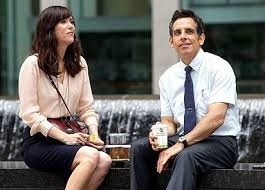
Ben Stiller- you surprised me on this one. Excellent performance. Absolutely wonderful.

20140105-142109.jpg

In a simple way, the movie is an underdog story of sorts. Look at it another way, its a movie of self discovery. Walter, a negative asset manager at the Life magazine, is a witty, charming, world saving guy, all in his head. In reality, he is a general nobody, who has a habit of zoning out at key moments into the secret life. That is, until he finds himself on a journey to recover a negative, the number 25, that must be the cover of the last edition of LIfe.

Ben is astoundingly brilliant as Walter, and adds a level of comic timing and maturity to his role that i haven’t associated with him so far. For me, he has always been a bit of a goofball, who does movies like Meet The Fockers, or A Night At The Museum. SLOWM is not a goofy comedy. Its a pleasant and nice movie, with some hilariously comic moments that are not antics backed, but are script and screenplay backed. However, the part that impressed me more is when Walter Mitty is being the real Walter and not the subconcious one. Down to his pocket notebook, where he keeps his expenses, or replies in a matter of fact way that he chose Yemen as his route because of the $84 airfare.

The rest of the cast is fairly average, with the exception of the three minutes of Sean Penn. “When I like something, personally, myself, I stay in it. I find the camera to be a distraction.” The love interest, the sister, the mother, the colleagues, the transition manager, etc etc etc. – all of them are strictly average. But, such is the towering presence of Ben Stiller in the movie, that you dont mind these props.

The movie has some breathtaking cinematography. If there was ever to be made a case for Greenland, Iceland and Afghanistan as a tourist destination, this movie is one. Some of the shots are breathtaking. And the shots of Iceland before the eruption of the volcano are picture perfect.

Its a taut, nice and fluid movie, and and an immensely enjoyable one. A heartearming tale. I would go with a 3.5 on 5 for this one. Go watch it.

Book Review: The New Killer Apps by Paul Carroll and Chunka Mui

20140103-230542.jpg

Several years back, Chunka Mui and Paul Carroll had published a not entirely prophetic, but a wonderful, insightful and a hugely successful book, Unleashing The Killer App. The book was one of the front runners in establishing the disrupting impact the digital revolution was going to have on businesses. There were threads that a lot of us understand and remember, like Kodak. And there were futuristic implications, some of which came true while some did not.
With the benefit of hindsight, it is easier to be critical or defensive about your own earlier thoughts and theories. Thankfully, in their new book, Chunka and Paul move on from where they left, and build upon some of the principles they believe will shape the nature of disruptive innovation going forward.

In this book, they remodel the notion of SMAC (social, mobile, analytics and cloud) , a much abused acronym these days by technology solution providers, and identify six different mega trends (and bring in the notion of cameras and sensors). They pick a running case study, of Google’s driverless car, to highlight the multi-industry multidimensional impact such disruptive innovation can have. And they create a template of sorts for businesses to emulate, assuming they are serious about disruptive innovation.

And that’s where you as a reader have to take a call on how you see your own organization.

To push the point further, would you agree that while most businesses continue to look at incremental avenues, at the same time, in almost every business, the last few years have seen forces of disruption largely led by technology driven innovators. For instance, retail has started moving towards integrated online offline models of best buy, or the continuously pushing one’s imagination Amazon. In banking, direct banking, mobile banking, mobile payments and NFCs have transformed transactions. In insurance, a policybazaar suddenly offers you multiple choices at your fingertips or on a portal. And in the middle of all this, there are organizations which are hoping to grow at breakneck pace by using incremental methods only.

NKA busts the discussion in the middle, by asking you to focus on what can really and truly be considered a killer app. It implores you to focus on a battery of ideas while choosing your investments wisely. It urges you to stay close to your DNA, because “culture eats strategy for breakfast”. And it emphasizes the need to do away with conventionalism, by asking you to “kill all the finance guys” when you undertake the quest for a NKA.

An immensely enjoyable book, with dollops of case studies, unfortunately primarily from USA, relatable challenge scenarios that businesses struggled against, overcame, or failed to work around, and a breezy narration make it a worthwhile buy. However, the real value of this book would be to convert it into a template of sorts that you can go back to your own whiteboard with, and start re-examining your investments critically against. You may realize soon that some of your strategic investments are misplaced, some are overambitious, some have not been evaluated, and some lack the planned design that even innovation needs to have. Probably, the biggest reason I enjoyed the book is because it gives one a way of structurally nurturing creativity and imagination inside a large organization.

I have already posted a short review on amazon, which is here.

I would go in with a 8 on 10 on this book, primarily because its one of those rare business books which is not bloated, pedantic or preachy, despite being immensely insightful. And its a quick read.

A New Year Post (Customary Thing To Do As A Blogger)

First up, a very happy new year to you all. Thank you for being so faithful, using random search terms to land here, appreciating some of the cock-a-meme offline, and every now and then, asking me to write more. Its a short life, and one must be thankful for the gifts that one gets – deservedly or undeservedly.

funny-new-years-day_1388107407I hope all of you continue to make resolutions, keep up the spirit for a week or so (or maybe longer), plan out the gory details of your life, and then, live it up like only you can. I hope there are no regrets about the unfulfilled plans, and there is some joy still left in accidental discoveries.

I hope all of you continue to be who you are, or a better version thereof.

As for myself, I have decided that I will try and rediscover my forgotten maxims –
1. Be happy. Given who I am, and what I have to offer to the world, the world has been very kind to me.
2. Do everything with a lot of love. I was never the guy who did everything, or anything for that matter, with a lot of passion. But I get by with a fair bit of love.
3. Meet people, say hello, smile a lot, think a little less. Be interested. In myself. And others. Rekindle the forgotten relationships, let go of the biases that creep in, give myself another chance. And then another.
4. Try and be better than myself. Of today. Every day.
5. Not have a plan, but have many goals.

And one of the goals is more than 313 posts this year. Which amounts to less than one off-blog day per week. The only way to improve your writing is by writing. A lot. And I think the half baked stories need to be completed. And the yet to be fleshed out script. The last year started off OK, but I dropped the ball somewhere. And never really picked it up. But the good news is – I am a father. The better news is – much as I find Aaroh the most adorable thing in my life, I am not turning this into a daddy blog. Daddysan does it better. Hop over to that site.

Have you guys seen “The Wonder Years”? One of the most amazing things about the TV series was the closing thought that the older Kevin would often end an episode with. And it often started with – And the funny thing is/was…

But the funny thing is – I have no idea what I am going to write.

Aaroh

This one was penned on the morning of 9th September, the day my little one, Aaroh, was born. The delay? Well…

कहीं अपनी नज़र ना लग जाए,
अपनी आवाज भी पर्दों में छुपा दी मैंने।

******************

तुमने आने की खबर यूँ दी है…
जैसे शाम के धुंधलके में
कमरे के कोने में खड़ा वो गिटार
हवा के झोंके से हिलते पर्दों से टकरा कर
एक नयी सरगम बना गया हो।

एक तूफ़ान था बिखरा सा झरोखे के परे
एक ख़ामोशी थी सहमी हुई सिरहाने में
ये नाखून ख़त्म हो से गए थे
पसीने से लथपथ एक साया
और तीन जोड़ी आँखें इंतज़ार में
और न जाने कितने कान जो फ़ोन की घंटी
में तुम्हारा ज़िक्र ढूंढते थे

और जब पर्दा खुला
नेपथ्य से इक आवाज़ आयी
बाअदब बमुलायाज़ा होशियार
शहंशाह ए हुकूमत
ताजीरात ए दास परिवार
सिंघासन पर ‘आरोह’ कर रहे हैं।

साज़ के सुर की तरह
सुबह के नूर की तरह
शाम की अज़ान के मानिन्द
इक नए दस्तूर की तरह

हवा का इल्म हो तुम
होठों की आवाज़ हो तुम
इक हसीं ख्वाब हो तुम
एक नया आगाज़ हो तुम

इक दरख़्त का साया
इक आम की गुठली हो तुम
मेरे लड़खड़ाते कदमो को थाम ले
वो ऊँगली हो तुम

तुम मेरा कल हो
तुम्हारा आज हूँ मैं
तुम्हारी अनकही कहानी का
अंदाज़ हूँ मैं

मेरी जन्नत मेरा इल्हाम हो तुम
मेरे चेहरे में मेरी रूह का पैगाम हो तुम
तुम ही आरोह हो अवरोह तुम ही हो मेरा
तुम ही मेरा राग हो, संगीत हो, मेरी ताल हो तुम

Thank You Sachin

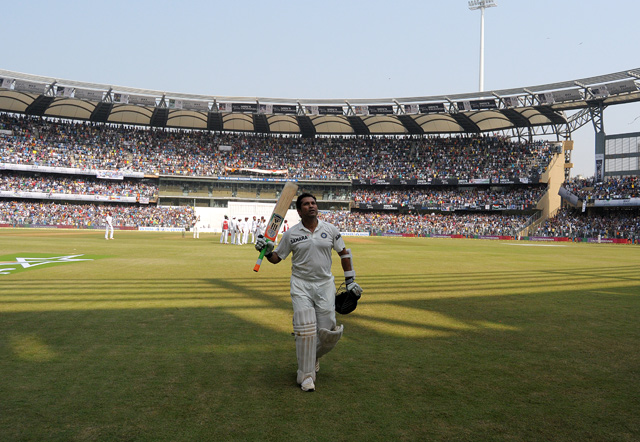
Its been a while since I wrote something on this blog. But then, some things need to be written. And that’s that. I am here. To say one more time. #ThankYouSachin.

Image

In a way, you can call him my first ever crush. That sounds inappropriate coming from a guy, but its true. You stay up all night to be with him. You would probably be ready to give up your precious bicycle to shake hands with him. And not wash your hands for days after that. You wait eagerly to watch them in action. Say something. Something. Anything. Their arrival (on the pitch) is the moment you’ve been waiting for. Their departure, the worst point of your day. They become the reason why you stick on to a match. The only time I managed to get an autograph was when he came to Ranchi to play in a double-wicket tournament (do double wicket tournaments still happen these days?).

I have a distinct memory that defines my relationship with Sachin. But the memory that I am talking about is a couple of years before Sachin debuted. It was the India-Australia league stage match of ’87 world cup. India lost to Australia. Steve Waugh had done what he always did. Came to bowl the death overs to sound the death bells of the opposition. Somewhere you liked Steve Waugh. Somewhere you hated him. At that time, I was 7 years old. Our room (me, bhaiya and didi) had posters of Srikanth, Gavaskar Kapil and co. We lost by 1 run. After a pretty awesome start led by Gavaskar, Srikanth and Sidhu. We had a usual middle order collapse. Our number 10 batsman in that match was Manoj Prabhakar, who eventually opened the batting for India at a later stage! We still lost. I pulled down the posters of Shastri et al. Tore them down.

Being someone who started watching most of his cricket around that time frame, I always thought that we had a spineless and a 50% team. 50% of the team was there on merit, while the rest where there because we did not have anyone better. The older players had started fading, and newer ones were few. The flashy shastri of Benson & Hedges had given way to a walk-stop-walk-stop Shastri by then. Colonel was slowing down. Gavaskar, Srikanth and co were exhausted. And we celebrated mediocrity. And victories over Pakistan, as and when they happened.

And then came Sachin. In 1989. The exhibition match. The four sixes of Abdul Qadir in the same over. I felt good. Then NewZealand. 82 of 49. Somewhere, Perth had happened. And I was growing a spine. For the next decade, he became the reason I watched matches. I switched off television after he got out. I hated people like Jonty Rhodes or Adam Bacher. I hated people like Harris even more, bloody part-timers who got him every once in a while. I rejoiced Olonga badgering, even though I knew that the previous one was a one-off fluke. I created revenge stories in my head. And the ultimate high of that hit-over-the-midwicket off Shane Warne. Or, that straight six of Kasprowicz in Sharjah. And that straight drive. And that paddle. And that drive. And then the nudge. That flick off the hips. That manoeuvre. That lofted shot over the wicket keeper. That hunger for that single. That back. That tennis elbow. That heavy willow. That stance. That looking towards the sky. That late cut. That playful leg break. And the number of times I played those shadow shots in the house. In the neighbourhood. Tried to. Still try to.

Our hopes created many Robins for this Batman. And we blamed everyone else for the times when India failed while he fought on. Gradually, we started blaming him. We blame the Gods, don’t we. For the pain and suffering in this world. So, we blamed him. But did not feel good about it.

We wanted him to retire earlier, because we didn’t want him to die a mortal. The sudarshan wielding Krishna who was shot by a mortal’s arrow. Sa-deha Swargyatra.

And now he does. It doesn’t matter what he did in the last year or two. Because we are ungrateful like that. Because we forget that the Indian Cricket team of today is, in fact, his legacy. And of a few others who get forgotten when a moment like this comes (Dravid, Ganguly, Laxman, Kumble…). There may be more who may end up scoring more, better, faster, more consistently, more frequently. The game will change and the players will too. Yet, there will be none who can be Him. And there will be none who will impact a sports in a nation like he did. So, lets celebrate the One. The Only One. #ThankYouSachin.

Image

Kohli summed it up for me when India won the world cup last year – “He has carried India for 20 years, so now it is time we should carry him.”

Image

Image courtesy: Dailymail.co.uk, Firstpost, NDTV

Chashme Baddoor. Or Bad Odour

The new Chasme Baddoor is so bad, that it makes you wonder whether David Dhawan has really seen the original one. Or, did someone just give him the script of the older one?

The classic. The one that Sai Paranjpe made. The one that had Farookh Shaikh, Dipti Naval, Ravi Vasvani, Rakesh Bedi, and Saeed Jaffrey. The one that had only a few songs but even that tiny number included two classics – Kahan Se Aaye Badra, and Kaali Ghodi Dwaar Khadi. The one that was so natural that it seemed like it was happening in your neighborhood. The one that featured one of the most iconic non-existent brands ever – Chamko – jhaagwala, khushbudaar Chamko. The one where the smallest of acts, like the one of sharing a cigarette, or going on a bike together was given a magical touch of endearment. The one… Yeah. You get it.

The one.. was subtle. This one is loud and juvenile. The one … was understated. This one is an attack on the senses. This one has pathetic and randomly thrown music, compared to the adequate and beautiful music of The One.
The only thing where I do not want to blame this one is that at least two of the four central figures have tried to act. And the peripherals show up with decent preparation. Remember Saeed Jaffrey. Remember the short powerful sequences at the Paan Bidi shop. This one has Rishi Kapoor running a bar in Goa. And because David Dhawan did not trust him enough, a Lillette Dubey is added as his romantic interest. And two Anupam Khers. And Bharti Achrekar. Not that they are bad, but it just tells you that some calculation has gone wrong, when one powerful Saeed Jaffrey cannot be sufficiently replaced by five good actors. And I can never get over the fact Directors like David Dhawan always reduce such a fine actor as Anupam Kher to such caricaturish characters. The most disappointing presence of the lot, though, is – not the leading lady (even though “dam nahi hai boss!”) – Ali Zafar. Even Arjun Rampal would seem to have more variety to his expressions. In comparison. If you want to. That is. But why would you!!

Long after it got over, I asked myself if my hatred is so high because of the comparision with The One. Yes. Halo effect did happen. BUT. Even if I try to think about the positives, to be honest, I can only think of two – my first experience of watching Siddharth act as a buffoon and a crass lad, and Divyendu Barua, quasi repeating his Pyaar Ka Panchnama act. They do try hard to salvage.
Please do not watch it. I implore you. Let’s not encourage such travesties as David Dhawan’s Chashme Baddoor and RGV Ki Aag.

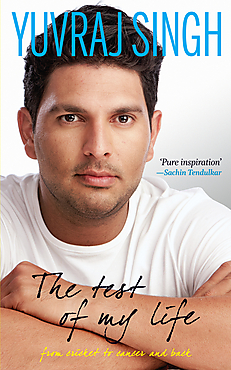
Book Review – The Test of My Life – From Cricket to Cancer and Back

the-test-of-my-life-from-cricket-to-cancer-and-back-hardcover-Have you ever started your day with an abrupt cough and vomiting attack? Imagine a tooth pain, can you? How does the drudgery of going to the office or college or school feel like on that day? Are you able to focus? Now multiply that discomfort several times over. And then, imagine trying to focus hard enough to win a world cup. And be the player of the tournament. Fathom the magnitude? That’s what Yuvraj did in 2012, as he overcame major personal odds to win the tournament. Yuvi pours out his heart in this chronicle of his fight against Cancer. Abruptly at times, incoherent at times, but with his heart in the right place most of the times.

This book is not exactly an inspirational book, like most such books are expected to be. It’s just a heartfelt chronicle. It starts with his denial of the disease, and ends with his eventually successful treatment of it. It is not a tale of heroism. It is not a glorification of how this victory was achieved. And thankfully, it gives credit where its due. The people around Yuvi who helped him wade through this journey. The resources he had at his disposal. And probably, most importantly, his mother.

The book was kind of personal to me. Over the last couple of years, we have gone through a similar journey, where sometimes the very act of living gets discounted by the fight for survival. Moving from a test to another, one opinion to another, one chemotherapy session to another. You know that you don’t have an option but to fight, but it becomes difficult every now and then. Somewhere when I was reading through the book, the book was an insight into how my dad might have felt over these months. We do not have the kind of resources that Yuvi might have had at his disposal, but I am sure the fight of mind over body does not become easier just because you have the best doctors looking at you. So, for that, I am glad that I read this book.

The book does not carry much of a literary value. Its language is unpolished, and fairly inconsistent. The timelines are fuzzy, and the editors have done a rushed job on the book. I would say that it’s a purely commercial act, and that ends up discounting Yuvi’s ordeal a fair bit. But thankfully, somewhat like Rafa’s sectional autobiography, the book has a very honest sound to it, and that’s what makes it an OK read. A somewhat more interesting story that runs parallel throughout is Yuvi’s relationship with his father. It makes you wonder if it was even a remotely healthy one or not. And how did such an unhealthy relationship become the foundation of such a promising sportsperson.

At this juncture, it’s difficult to say whether Yuvi will ever be a permanent fixture of the Indian Test team, but it suffices to say that several years back, when he opened the gates to the grand entrance, he almost blew them open. His talent is unquestionable, his work ethics has often been questioned, and his achievements do not stand true to his potential. Yet.

I think the true segment for this book is cricket lovers, and not people who are looking for an inspirational tale of fight-back. Someone who has no relation with the game may not even appreciate it. Not for cancer survivors really, because Lance Armstrong’s book is a better one for that. And I don’t enjoy the sports called cycling much.

And lastly, Dear Yuvi, you should not have used the book for such a heavy parading of your twitter presence and your charitable foundation. Seemed like an overdose by the end of it.

Jolly LLB – What The Brilliance Shuklaji

jollyThere is a sequence in the movie where Guruji (Sanjay Mishra), a hawaldar, is auctioning the post of SHO Sadar Bazaar to several police inspectors. His condition, in addition to the bid, the person needs to have a clean image. And the inspector who wins has only got an eve-teasing case from Delhi University pending against him. Suitably lauded, he wins the post for 65Lakhs only. Aap sabhi bade afsaron ko hawaldar ka namaskaar”, that’s how he begins the auction.

The simplicity of the proceedings is the heart of Jolly LLB. Jolly LLB is a rather simple movie with a simple idea and a simple script. And simply put, it’s a simple and enjoyable movie.

The movie has its fair share of flaws. Amrita Rao would stand out as the primary. She is not needed. Due to her, there are three songs in the movie and they waste time. And they slow down the movie intolerably. The first half of the movie hence, is slow. You get thepoint of the struggling lawyer, the success of a PIL, a case too strong to hit the headlines, a judiciary so weak that the criminals walk scot free, and a very successful lawyer who’s methods are questionable but his success is not. The part that takes about an hour, could have been done in about 20-25 minutes. Especially because the movie does not mope about anything. It does not over-dramatize anything.

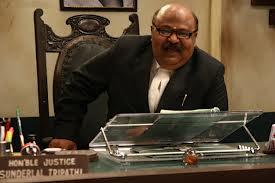
Second half of the movie is much better paced. And with a lot of oddities being there, Subhash Kapoor leaves it to one of the most talented character actors of the industry to seal the case. Saurabh Shukla as the Judge Tripathi. An absolutely brilliant performance that outshines the other two excellent performances from Arshad Warshi (Jolly/ Jagdish Tyagi) and Boman Irani (Rajpal). Towards the end, as he takes subtle control of his courtroom and his bellowing “baith jaiye tejpal sahab. Ye mera courtroom hai” contrast to the burping and conniving judge when he’s introduced, are a joy to behold. It was also softly pleasant to see Ramesh Deo on screen, the man I most remember as Anand and Babu Moshai’s friend.

The other two flaws – Arshad Warsi is good, but is good doing what he has done too many times. His acting/style is not very different from his last few roles. I wonder when he will do another Sehar kind of role. More understated and intense than his lathering blabbering self. The second – here you have a young lawyer who is struggling and unmarried and is dating a school teacher. And Arshad Warsi does not look young. Not in one frame of the movie.

But he compensates for it. Still. It’s a nice movie. Not awesome. But nice.

Kai Po Che – A Casting Story

images

More often than not, overhyping a movie tends to kill it for the viewers who watch a movie late. And in these times of high information consumption, much as you try, those facebook status updates, or blogger reviews, or media soundbytes do reveal more than you would care to know about a particular movie. KaiPoChe was at risk. It was overhyped.

And it did spoil a few things. But not a lot.

Kai Po Che, for me, is a good example of how right casting makes huge difference to a movie. One of my gripes with 3idiots would always be that barring Shrman Joshi, the other two did not really seem well cast. Kareen Kapoor even more so. However, almost an accident since the big stars did not want this movie, the entire cast of Kai Po Che is near perfect in their aura. It was difficult to not like the movie. Now the question is – did I walk in wanting to not like the movie? Yes. I hated the book– The Three Mistakes Of My Life by Chetan Bhagat. Of the many really average books he has written, I think 3 mistakes is the worst. So, I did not want to see such a bad book turn into a good movie. In some corner of my mind, I was hoping that this movie would be as big a disaster as Hello (which is based on “One Night AtThe Call Center”, the second worst book by CB).
kai-po-che-movie-poster-6

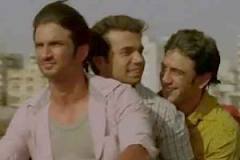
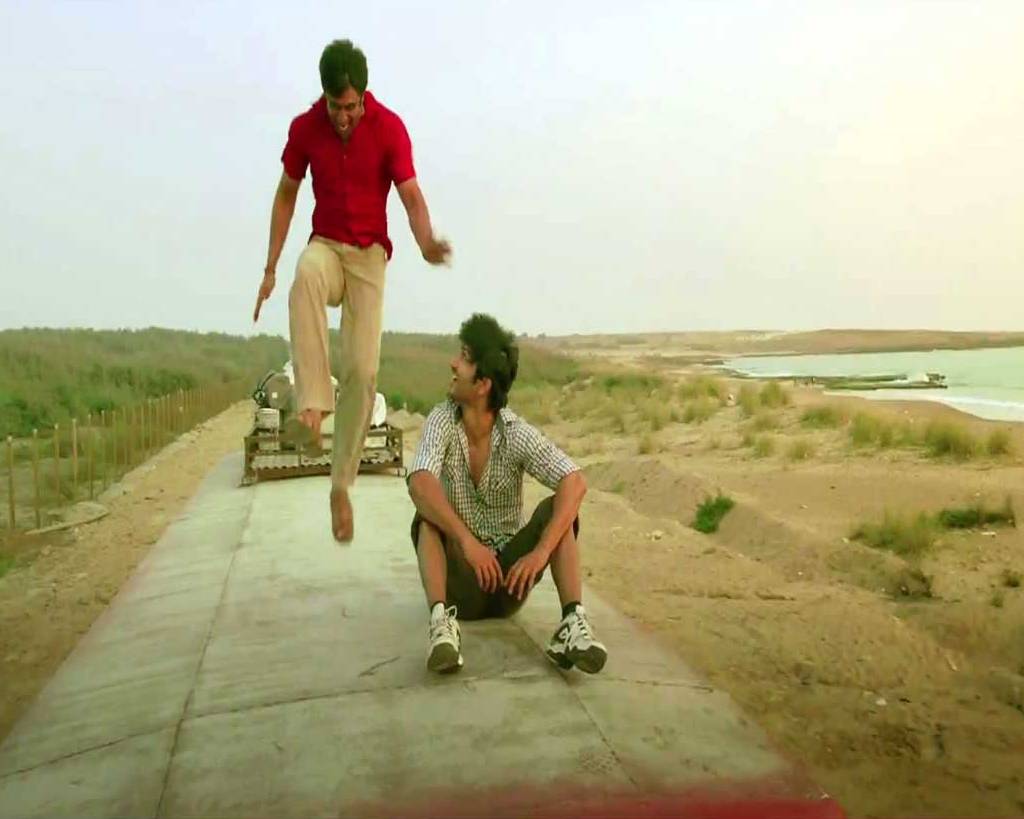
Sushant Singh Rajput as Ishan, the obsessed cricket fan, is excellent. His angst, and the futility of his existence (for what else is it, if you’re a failed fanatic who can demolish even the things you really loves in a moment of frenzy), and his silent apologies – he works well to deliver the central character. There is a certain amount of energy, almost Shahrukh-ish (the early career). Rajkumar Yadav as the bumbling young man, who, for a non-gujju, is the quintessential gujju – the obsession with money matters, the persistence, the brilliant understanding of pennies, and a can-go-to-any-length-kinda-friend. Unsure in the company of Vidya (Amrita Puri), and the enterprising one – Govind is the perfect shadow in the movie. He keeps it real. Vidya is a perfect balance of caring and cunning naughtiness, and has a refreshing screen presence. She was pretty good in aisha too.
But the standout performance for me was Amit Sadh as Omi. In a way, his is the only character that evolves over the movie. The others carry their personality through the movie. Omi, however, graduates from being someone who almost follows anything that Ishan says, to an unsure and reluctant politician, to an enraged fanatic, to a scarred for life young man well beyond his years. His body language, expressions, dialogue delivery, and intensity evolve from frame to frame. Excellent performance!

Credit must be given to Abhishek Kapoor, and whoever else is the dialogue writer of the movie. The screen play does not deviate much from the movie, though the level of detailing is quite good. Despite the enormity of the events, their handling (which is praiseworthy given the quiet and peripheral handling of Gujarat riots and Godhara) never deviates from the core story of friendship.
Music by Amit Trivedi is excellent as usual. At the end of it, Manjha is the song that stays with you for very long. Swanand Kirkire’s lyrics add their magic to the notes.

Barring occasional pace issues, the movie is an extremely enjoyable watch. And watching Harbhajan take wickets was like an encounter with an alternate universe.

Can surely be watched and enjoyed. A 4-star kinda movie.

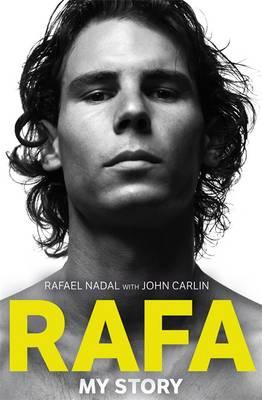
Book Review: Rafa , My Story

rafa-my-storyWritten by Rafael Nadal with John Carlin .

The book is a phenomenal piece of insight into how the mind of Rafael Nadal, one of the most brilliant athletes to play the game of Tennis, works.  The single minded focus with which he pursues the strategy, and the ability to execute what is often discussed in the war room on the field, that’s what makes Rafa special. Some may find it obtuse, but I have a feeling that one of these days, if Rahul Dravid were to expose the inner workings of his mind as candidly as Rafael Nadal does (has done), we would see how similar these two might be.

The book is written in two voices – one of Rafa himself, as he goes through “the final” against Federer – the first Wimbledon victory. The second is of the editor/author John Carlin. The chapters alternate with Rafa’s voice getting you as close to being inside Rafa’s mind as is possible (from the vantage point of the wimbledon final), and a third party narrative of how Rafa became what he is. The fans of Rafael Nadal may worship the book, while the non-fans would enjoy only about 30% of it.

Rafa’s narrative (half the book) is erratic and at the same time, so ruthlessly honest that you get a ringside view of the match, his mindset, his preparation, and his work ethics. The section has no literary value, no profoundness in the form of overbearing statements that every pack of jokers will claim to be their trump card. It’s a simpleton’s explanation of (probably) his biggest triumph, the victory of doggedness and mental strength over sublime talent.

Carlin’s narrative, on the other hand, is bland. It touches on several key aspects of Nadal’s career, but the focus on his relationship with his uncle Toni, the closely knit Nadal family, and his relationship with the world around him are barely scratched. The book steers away from almost all controversies, has nothing negative to say about anyone really. What one finds at the end of it is a warrior competitive to his core, who’s polished his swordsmanship talent by being in the arena for hours and days. And a gentleman. However, despite being bland and full of cliches, this is the part that reveals Nadal, the person, better than Nadal, the athlete compared to the other section..

If you don’t enjoy the sport, the chances are that you won’t like the book. It’s not a Mein Kampf, or My experiments with truth, which have a meaning for everyone. Rafa- An Autobiography, written halfway through Rafael Nadal’s career, is an enjoyable read, but not a great work of philosophy, as most awesome biographies/ autobiographies have the potential to be.

The Murder of David by Jayantabhai Ki Luv Story. Part 3

My middle name is Constipated

My middle name is Constipated

Vivek Oberoi has invented the expression that Neil Nitin Mukesh is adopting. The one of constipated anger. We will see large volumes of it in Zilla Ghaziabad, but for now, JKLS has him playing the role of a constipated bhai who takes dumps quite frequently. The comic relief is not bad at all!

The short description of the movie is – Girl has tough time in big city. Girl moves into a flat next to bhai. Hence, the rented status – Bhadotri. Bhai has an acquired status – Padosi. Padosi is a nice guy, and comically continues to help Bhadotri – with the frequent “just joking re…. sense of humourous”. One thing leads to another, and bhai and bhabhi get together. Some complications and twists thrown in here and there, and you have JKLS. Girl has a back story with her Baapu’s expectations. Bhai has side story with Big Bhai’s promises, Altaf bhai played by Zakir. Most likely, someone wrote a lot of funny mumbaiyaa dialogues and one liners, and then created a set of scenes around them. ‘That’, finally, led to a movie.

I have no money, and you are a bhai

Not a dream sequence, this one!

The plotline is wafer thin, but the acting and quips keep it together. Naseer, Zakir, Vivek Oberoi are the ones that keep things fun. Though, watching Naseer play a buffon rival gangsta/cop Alex Pandian (which by the way is a 2013 Tamil movie’s name as well). Alex Pandian’s fascination with bollywood is intentionally funny though, unlike the bulk of the movie. Neha Sharma, the bhadotri, does her bit by wearing fine and few clothes in a small time locality, living next to a supposed bhai, thereby creating unintentional hilarity. Surprisingly, she does not create any sense of awkwardness in the locality, or in the minds of a really conservative father who’s scared of sending her daughter to a big city, lives about 4 hours away from Mumbai, in a coastal city and pool-based-properties. Alibagh, you think? Main kya tere ko alibagh se aayela lagta hai?

Some of the dialogues are hilarious –  the Umrao Jaan reference while beating up a guy, the dig on Indian jails – when JB mentions that he graduated from IJU – Indian Jail University, because udhar bahut type ke English binglish bolne wale log aate, is a witty one. The movie has a Hotel Decent equivalent of Night Lovers as well.

The flow of sequences has no bearing whatsoever to whatever narrative storytelling might be all about, assuming the Director read the script, assuming there was a script, assuming script matters. Most set-piece scenarios are ludicrous. Thankfully, the movie ends while your patience with the chewing gum may still not be exhausted. Couple of songs are decent, though with sub-zero relevance to the movie.

The high point is Vivek Oberoi, which itself serves as a warning for a movie, usually. But honestly, he is quite decent. As decent as a constipated man can be a not so well ventilated room. The lady looks pretty. And is just about better than being a complete washout in the acting department. She is somewhat better than a fashion street top that fades on the first wash.

Short of it all – watch it on TV. You may actually like it.

This one was a 2 on 5 for me.

The Murder of David by Jayantabhai Ki Luv Story. Part 2

David ke do aage David. David ke do peeche David. Aage David. Peeche David. Bolo kitne David. 3 David! Correct. As you all know, David has 3 Davids.. And as you an guess, they do have a linkage somewhere. Otherwise, it’d be a lame idea to make a movie named David, right?

Davidar? Gower? Fincher? Schwimmer? No. Just David.

Make it 30 minutes shorter, cut down Monica Dogra’s and Lara Dutta’s presence, and tighten a few scenes. That’s all that David needs to be transmogrified into “Great Cinema”.

At the beginning of the movie, all three Davids are at the cusp of a life changing action.  A scene that we see at least thrice in the movie.

D1The first David is a perennially constipated Neil Nitin Mukesh. Since it is expected that he, having lost his father, would be a grumpy young man, his constipation is a disguised strength actually. Like that tweezer trick of Joey Tribbiani (FRIENDS). The second David (Vikram Virmani) is a hippie, who is so genuinely nice and all that you start wondering what exactly can go wrong with such a nice guy who doesn’t even have a girlfriend. The third David is a loony Chiyan Vikram. His (lack of) hindi skills don’t hurt him because of three reasons – he is a Christian (since independence, we have given Indian Christians the responsibility of speaking Hindi like leftover Brits would), he is in Goa (so speaking native hindi would be very unoriginal, a fact that is not applicable to the  other born and brought up in London desi David), and he is, in reality, a Tamil speaking superstar who was last seen in Ravana (after Ravana, one can forgive anyone anything).

D4Previous commentary withstanding, the third David track is the most interesting, with Saurabh Shukla adding a zing to the proceedings. Tabu waltzes in and out of this act and is brilliant in her role. Vikram himself is not bad at all. The supposed weak link of the story, Isha Sharvani, playes a deaf and mute character, looks ethereally beautiful, and has but a few expressions to take care of. The lady that plays Vikram’s mother is another piece of brilliant furniture in this large well lit room. The lighthouse symphony is a beautiful composition. AND, the constant ear trick is funny, a trait of the seafaring fishermen, I believe.

The first track, shot completely in black and white is reasonably tight. Though one wonders why Milind Soman is there to waste screen time. And Monica Dogra flirts and bites, but with little effect, and lots of boredom. Rekha Bhardwaj’s O Laal Meri filmed on Sarika is a nice touch, especially with the merging into the rock version. This is also the track where everyone seems to be wearing black or white, despite the shots being done in Black and White. Ah. Those were the days. Why waste on color when it has to be colorless.

D2The second track, the hippie track is the most disconnected track from the movie. If my opinions were counted for, I’d have asked Bejoy Saar to take it out, and focus on the other two. Nothing against Virmani though. Maybe, he was required for continuity, but I’d have figured out something else. But then, why waste 5-10 minutes on Lara Dutta and general sop. Moreover, since with the exception of the second track itself, the timelines don’t really have an impact on the proceedings. the 2011 story of Goan David could have happened in 1999 or 1973 as well. I hope I got the years right. I was too bored to remember such details by the end of the movie.

Bejoy Nambiar has got his casting quite right, I must say. Except Monica Dogra. Actually, her existence in the movie is not quite unjustified, but the length of her role is. In a movie of Davids, she is the real David turning everyone else into Goliath.

The detailing is quite nice too. Like, the David2 getting pager based messages. Or, people talking about the cost of bullets in 1973.
Soundtrack is praiseworthy . Very different, and very versatile, which is explained by the fact that there were 15 composers involved.

D3David, however, should have been cut down brutally by a good editor. Anurag Kashyap has been missed on this venture. I have been told that the Tamil version has only two stories. I think something like that should have been done for the Hindi version too. The end is quite well done. And Vikram’s Satku Santa is an idea that I’d love to take up some day. So much for secret Santa.

The movie is experimental, and well conceived. But not that well executed. And given the flavor of the season, executions should come easy, right?

Rating – 2 on 5.

Design a site like this with WordPress.com
Get started